
The Landscape Company
Haslemere · Surrey & Borders
When people choose Indian sandstone, they are usually picturing a finished scene: a warm terrace that flatters the house, crisp joints, and a surface that still looks good years from now. On a brochure page almost any sandstone can be made to look like that.
The reality on site is that some stones age gracefully and develop a lovely patina, while others start to flake, stain and go patchy after only a few winters. This guide explains why that happens and how we separate genuinely high-quality sandstone from material that only looks like a bargain on paper.
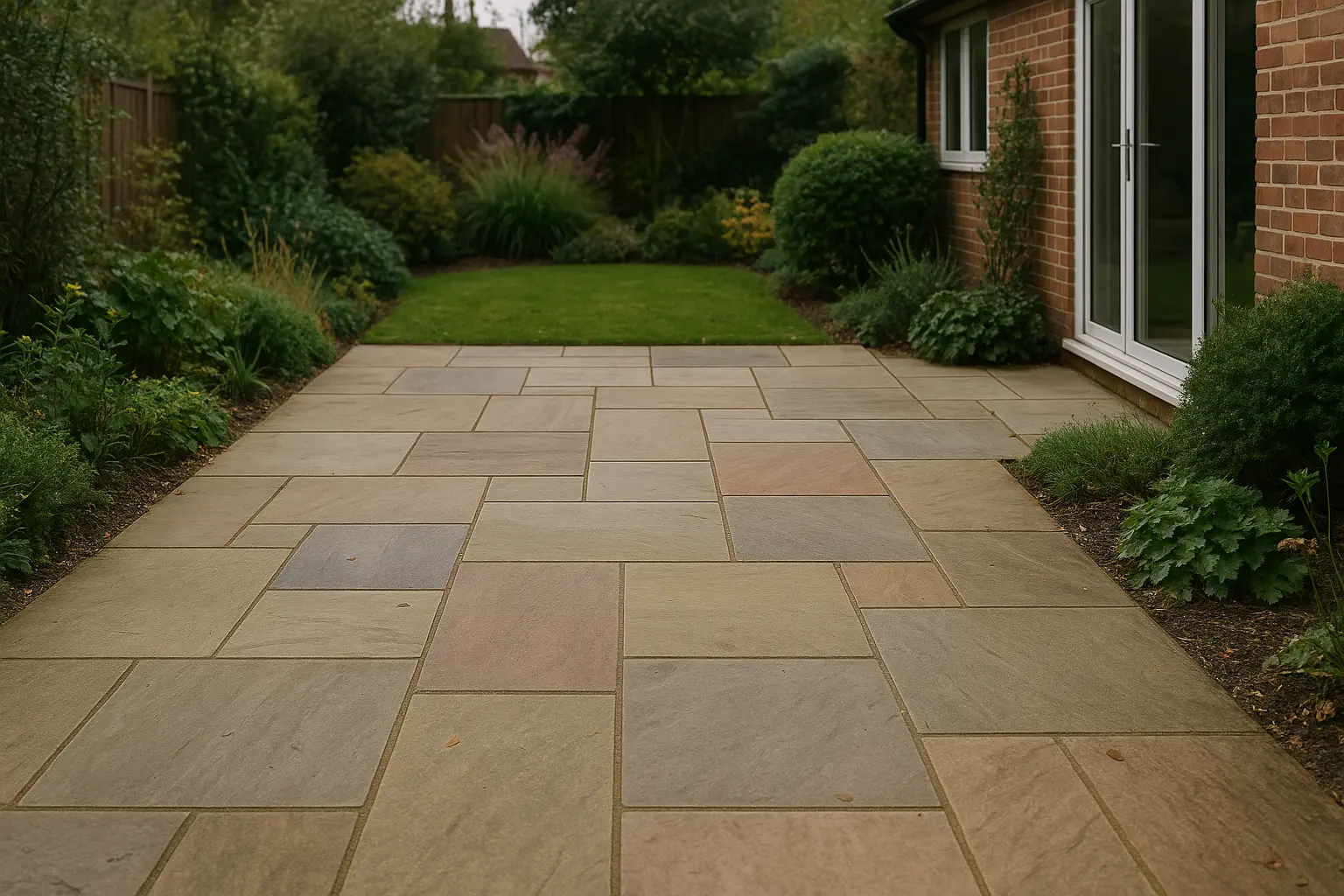
The stones that tend to age well share a few important characteristics:
At the lower end of the market it is common to see:
These issues make it harder to create a patio that looks genuinely high-end, and they tend to show up more obviously after a few seasons of weather.
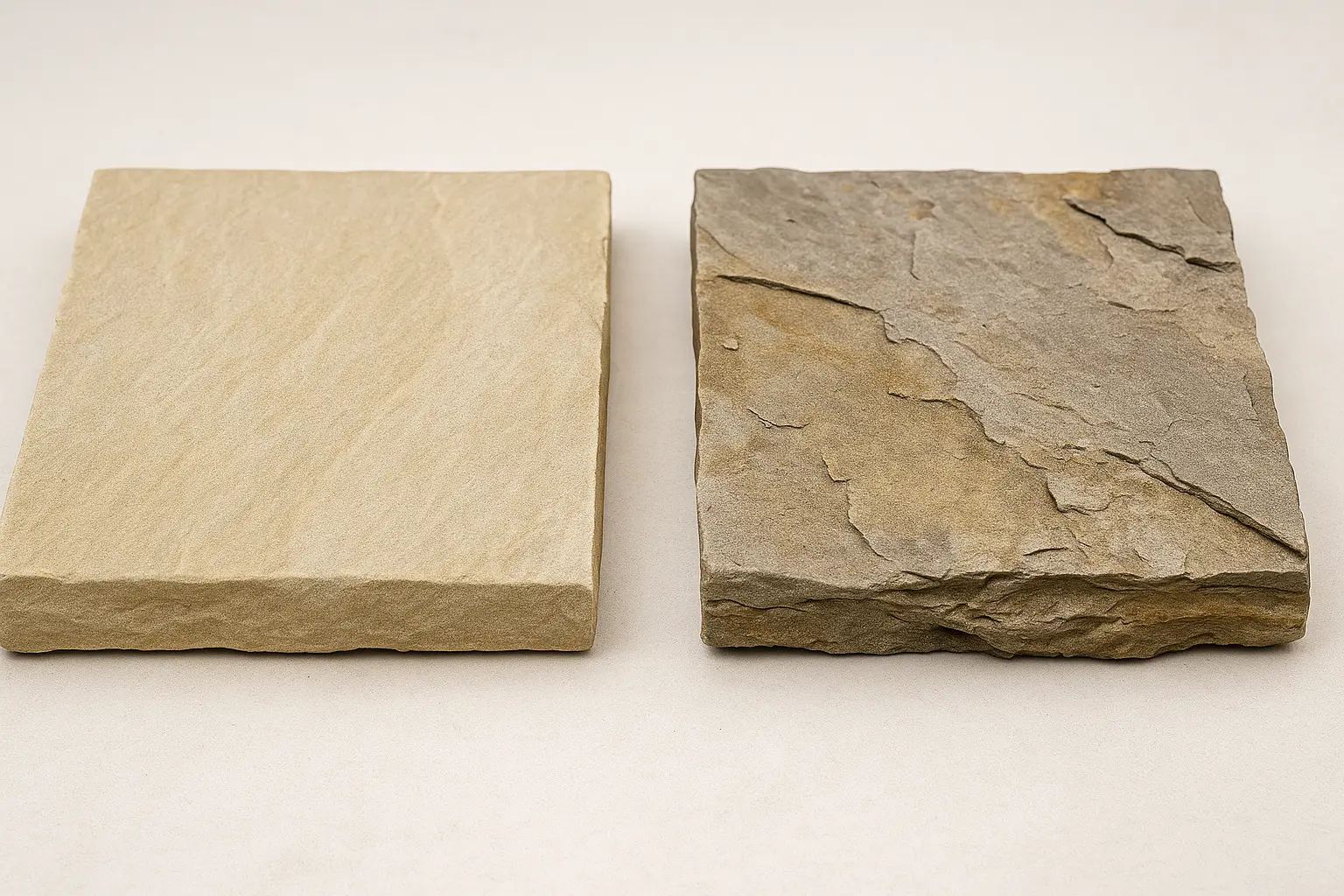
Once you are happy that the stone looks right, the next question is whether it will survive British winters and clay soils. The most useful clues are rarely visible in a photograph.
Stone with lower water absorption generally:
Reputable suppliers publish test values for water absorption and frost resistance so that specifiers and installers can compare products on more than appearance alone. Many of the well-known brands in the UK market, such as Marshalls, Global Stone and Ca’ Pietra, provide this type of data alongside their sandstone ranges.
Other important factors include:
Two stones that look similar on your kitchen table can behave completely differently after five or six years outside. We care more about the hidden numbers and the quarry they came from than the brochure photograph.
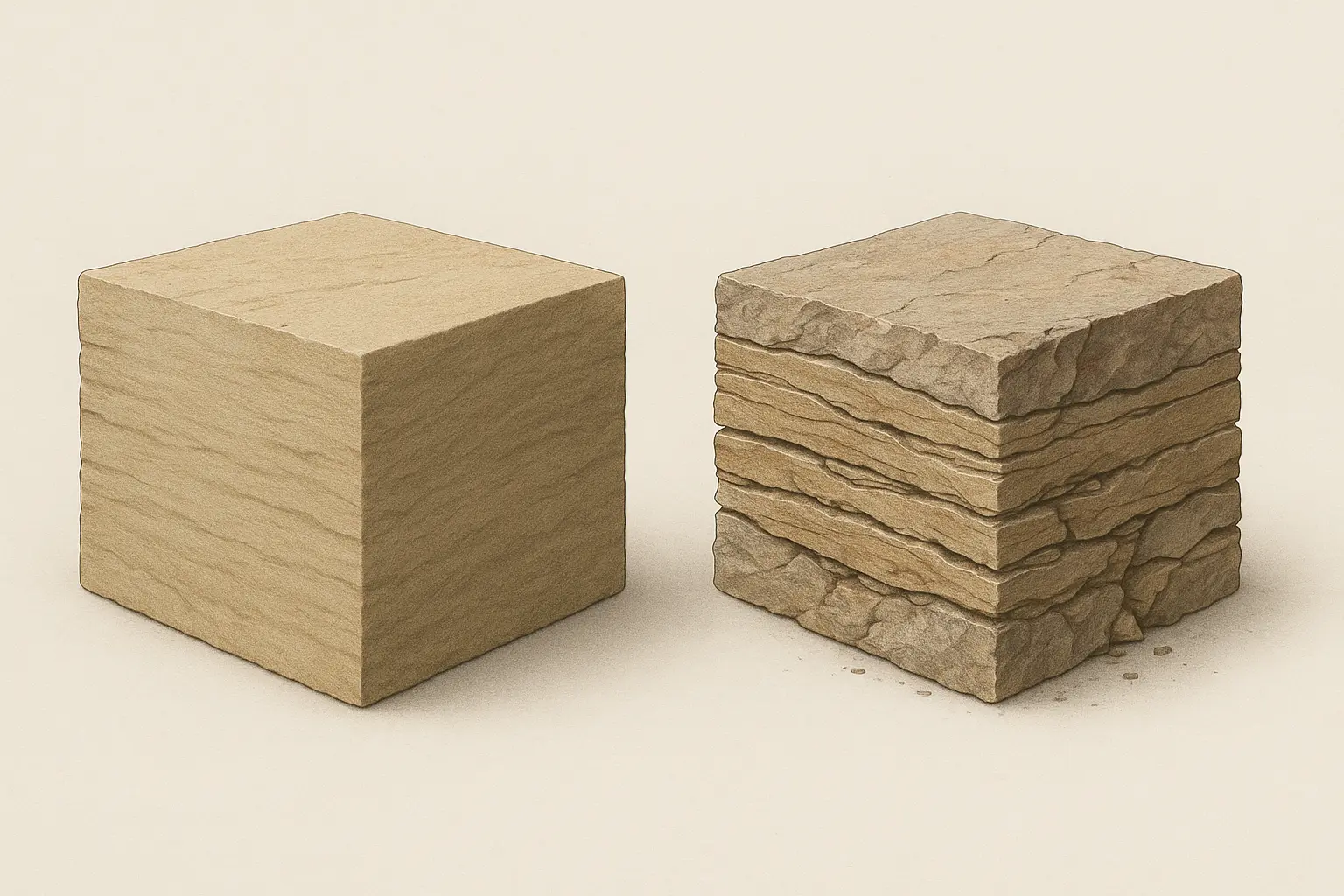
Once appearance and basic suitability are established, long-term performance comes down to testing, grading and what never makes it into a crate in the first place. This is where reputable suppliers separate themselves from container-only imports.
High-quality paving suppliers routinely test their natural stone against recognised British and European standards, measuring characteristics that directly affect durability in UK conditions. This typically includes published data for:
These tests help predict how a stone will behave once laid — particularly through repeated freeze–thaw cycles, prolonged damp conditions and everyday foot traffic. Lower water absorption, for example, generally means reduced staining, less organic growth and better resistance to frost damage over time.
Established UK suppliers often go beyond minimum requirements. Marshalls, for example, publish detailed information on their Stone Standards , explaining how their natural stone paving is tested, graded and assessed against relevant British Standards before it reaches site.
This level of transparency allows designers, contractors and homeowners to compare products based on measurable performance — not just how they look in a brochure image.
Another key difference between premium paving suppliers and commodity importers is what gets rejected before it ever reaches a lorry.
Well-established brands such as Marshalls, Ca’ Pietra and Global Stone typically:
Natural stone will always retain variation — that is part of its appeal. However, consistent quality control greatly reduces the risk that a patio is built using marginal material that should never have left the quarry.
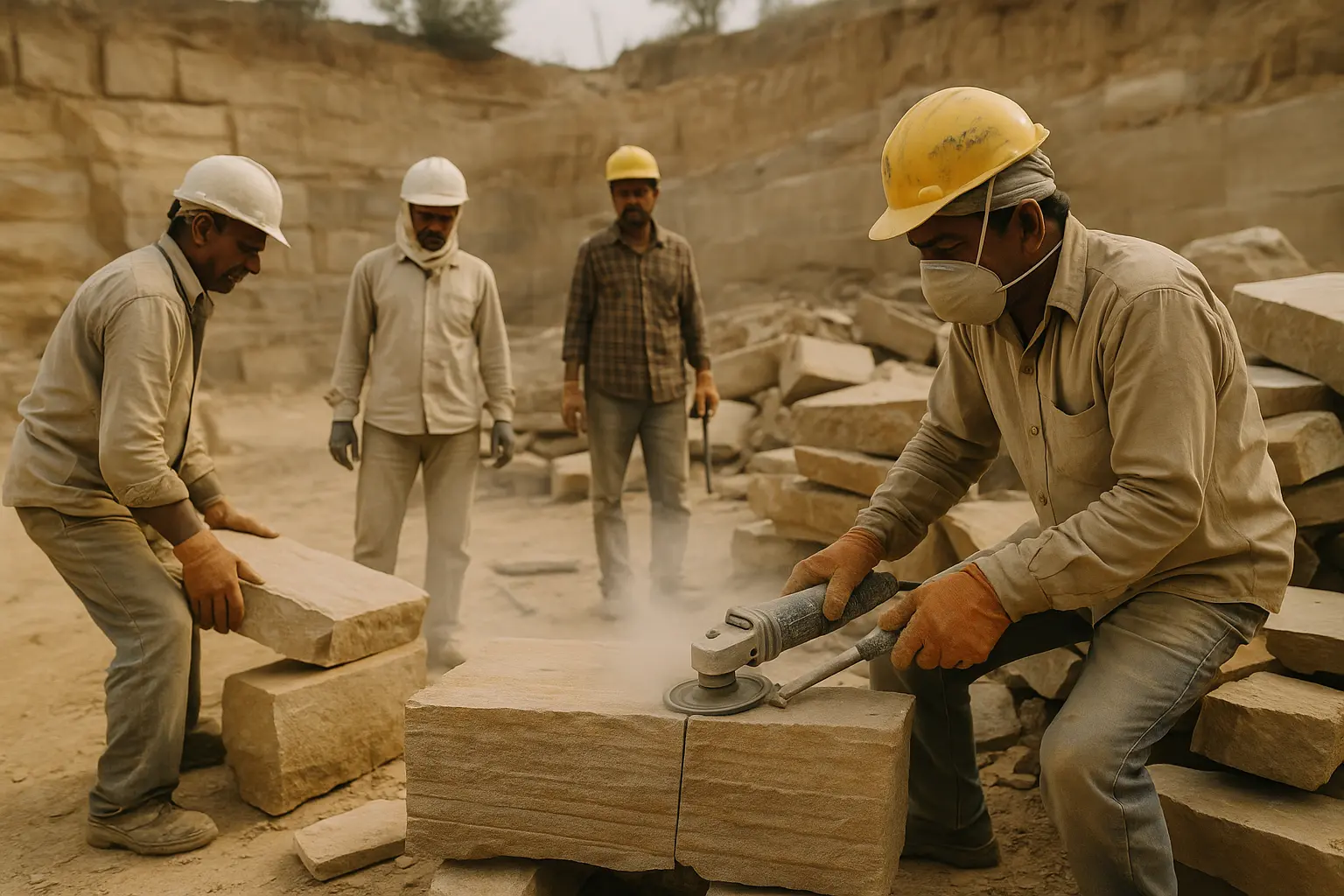
A large proportion of the sandstone used on British patios is quarried in Rajasthan, northern India. Investigations by organisations such as UNICEF and the Ethical Trading Initiative have highlighted serious concerns in parts of this industry:
The good news is that some UK companies are actively working to improve this picture. Marshalls’ Fairstone® programme, for example, was developed to provide traceable, ethically sourced sandstone. Marshalls has also worked with UNICEF on projects in Rajasthan aimed at reducing child labour and improving education, health care and safety for children and families linked to the stone sector.
At an industry level, the Stone Federation has introduced the Ethical Stone Register and the Responsible Sourcing Pledge. These schemes help specifiers identify quarries and suppliers that are willing to have their labour practices, environmental impact and governance scrutinised and independently assessed.
For most of our clients, the decision hierarchy is simple: the stone has to look right, and it has to last. Once those boxes are ticked, many are pleased to know that we can also steer them towards suppliers who are trying to do the right thing for the people who extract and process the material.
Our starting point on any project is always the same: does this stone look right for your house and garden, and will it stand up to our local soils and weather? From there we look more closely at where it comes from and who stands behind it.
When we recommend sandstone, we favour suppliers who:
Well-established UK suppliers such as Marshalls, Global Stone and Ca’ Pietra tend to meet these criteria more consistently than anonymous imports marketed solely on price. This does not guarantee perfection, but it significantly reduces risk for our clients and produces better long-term outcomes.
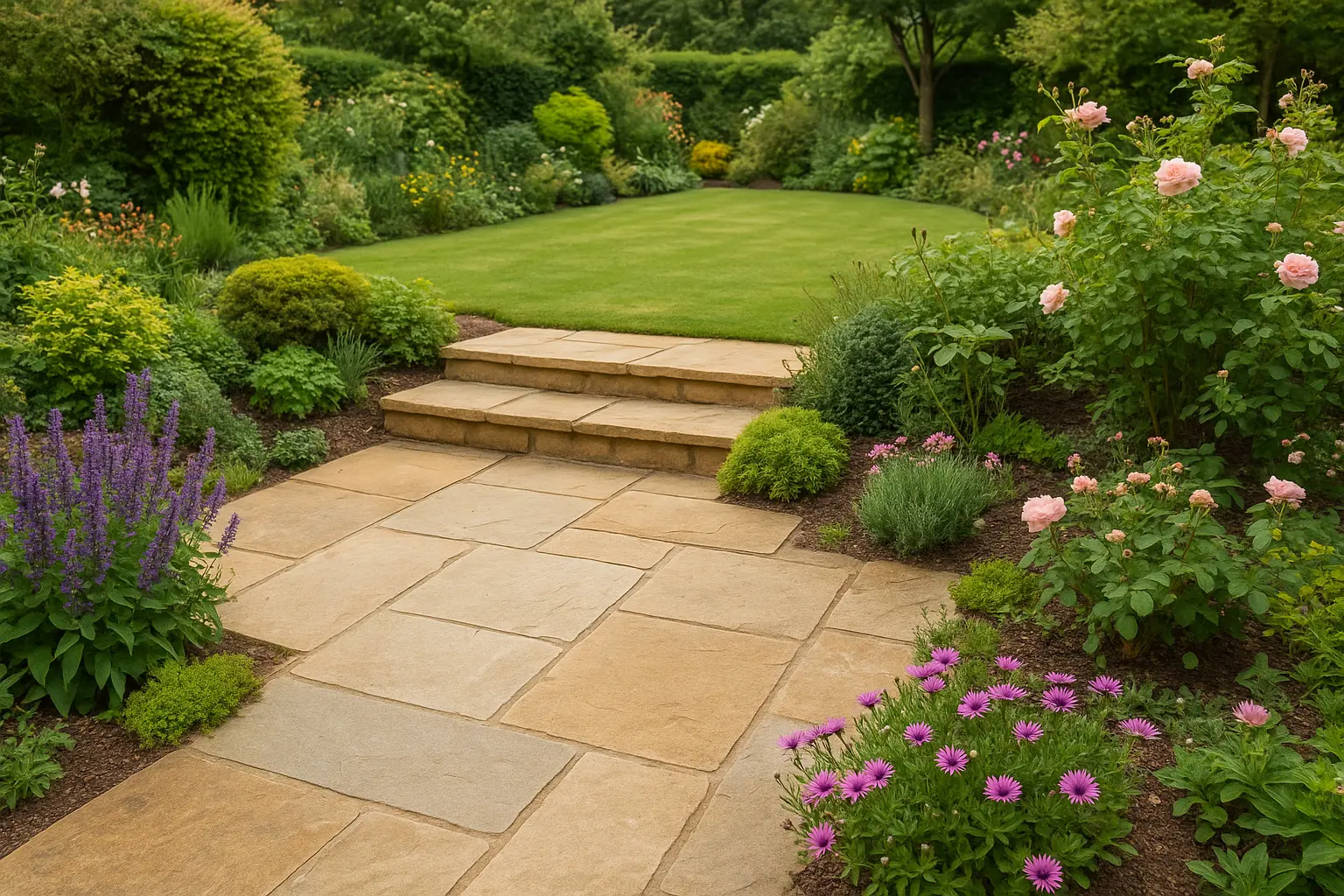
If you only remember a handful of questions to ask before choosing sandstone, make them these:
You do not have to become a geologist or supply-chain expert to make a good decision. Asking a few well-chosen questions and working with a contractor who has seen how different stones behave over time will do most of the heavy lifting.
If you are considering a new sandstone terrace, or want a second opinion on materials that have been suggested for your project, we are happy to share practical advice based on real installations in and around Haslemere, Petersfield, Godalming, Guildford and Chichester.
Call: 01428 654812 · 07500 877949
Email: richard@tlchaslemere.co.uk
WhatsApp: Send a WhatsApp message
Telegram: Message on Telegram