
The Landscape Company
Chichester · West Sussex
Choosing the right paving material is one of the most important decisions when designing a new patio in Chichester. Factors such as coastal air, clay pockets, chalk soils and exposure all play a role in how materials perform long term.
This guide compares porcelain and sandstone paving specifically for gardens across Chichester, Fishbourne, Bosham, Tangmere, Westhampnett and surrounding villages – and how they behave when installed over correctly built sub-bases and drainage.
Both materials can work beautifully in Chichester — the right choice comes down to property style, exposure and how you use your garden.
In central Chichester and modern developments, porcelain is a popular choice. In villages such as Bosham, Fishbourne and the South Downs edge, sandstone often feels more natural and pairs well with the local soil types and planting.
Step design and handrail positions are equally important. On sloping plots we often combine your chosen paving with correctly built retaining walls and level changes to keep access safe and comfortable.
For exposed Chichester gardens or properties near the coast, porcelain’s low maintenance is a major advantage. Where clients prefer a traditional, weathered look, we often specify higher-grade sandstones and combine them with the build methods in our subsidence & patio longevity guide.
Pricing depends on the product range and installation requirements, but generally:
Excavation, access, drainage and waste removal usually affect final cost more than slab choice itself – see our overview of landscaping costs in Chichester.
Both porcelain and sandstone require proper sub-bases, drainage and falls regardless of surface choice. We design the build-up using the same principles as in our drainage & groundworks guide so that movement and water issues are controlled from day one.
Chichester · Fishbourne · Bosham · Tangmere · Westhampnett · Lavant · East Broyle · South Downs villages
We can show samples on site, compare finishes against your brickwork and doors, and design layouts that suit your property, local ground conditions and any planning or conservation constraints.
If you are weighing porcelain against sandstone for a Chichester garden, these deeper guides explain how each material is made, how it performs outdoors, and what really matters beyond the brochure photographs.
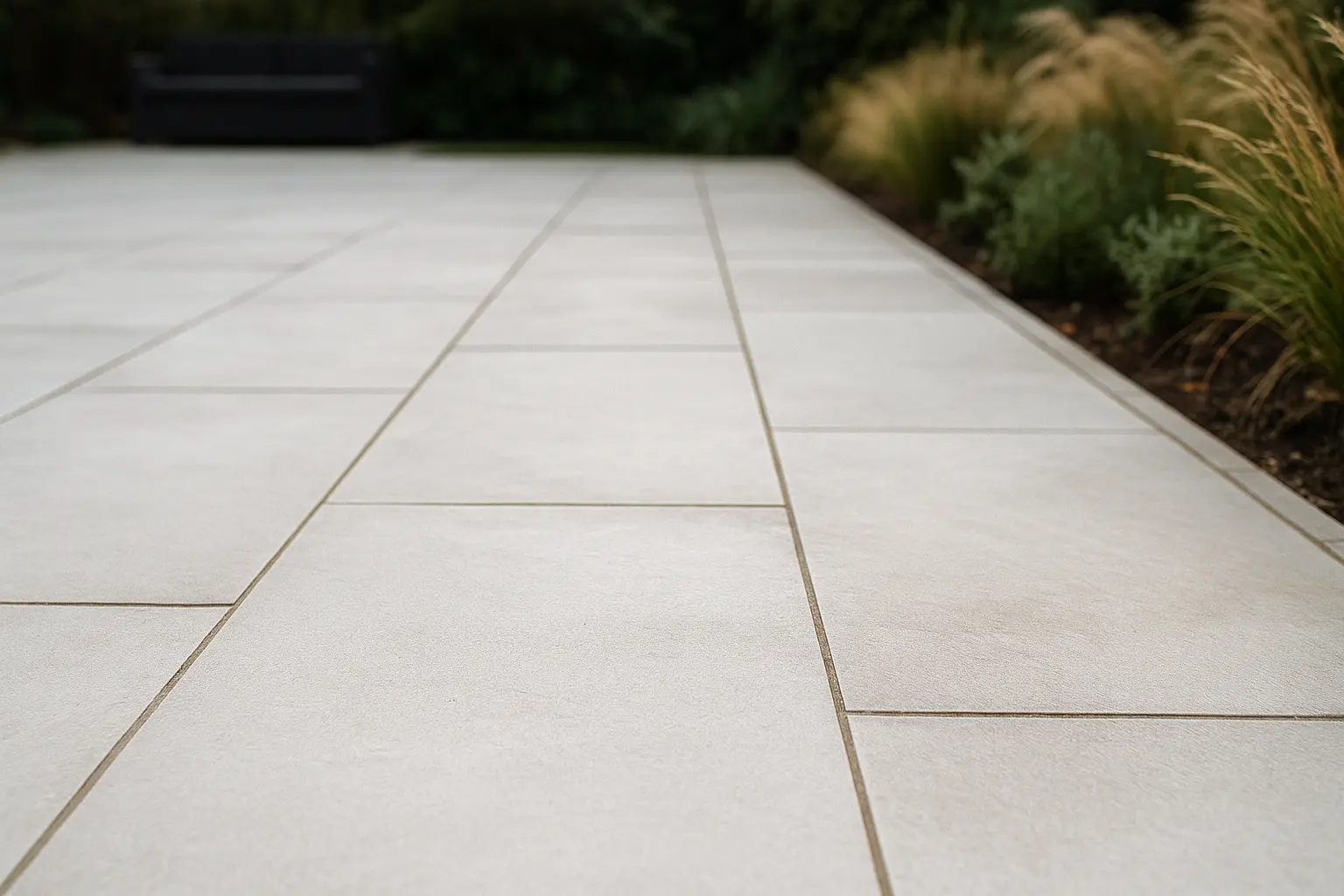
How porcelain is engineered, why some tiles crack outdoors, and how we assess quality before agreeing to install a product.
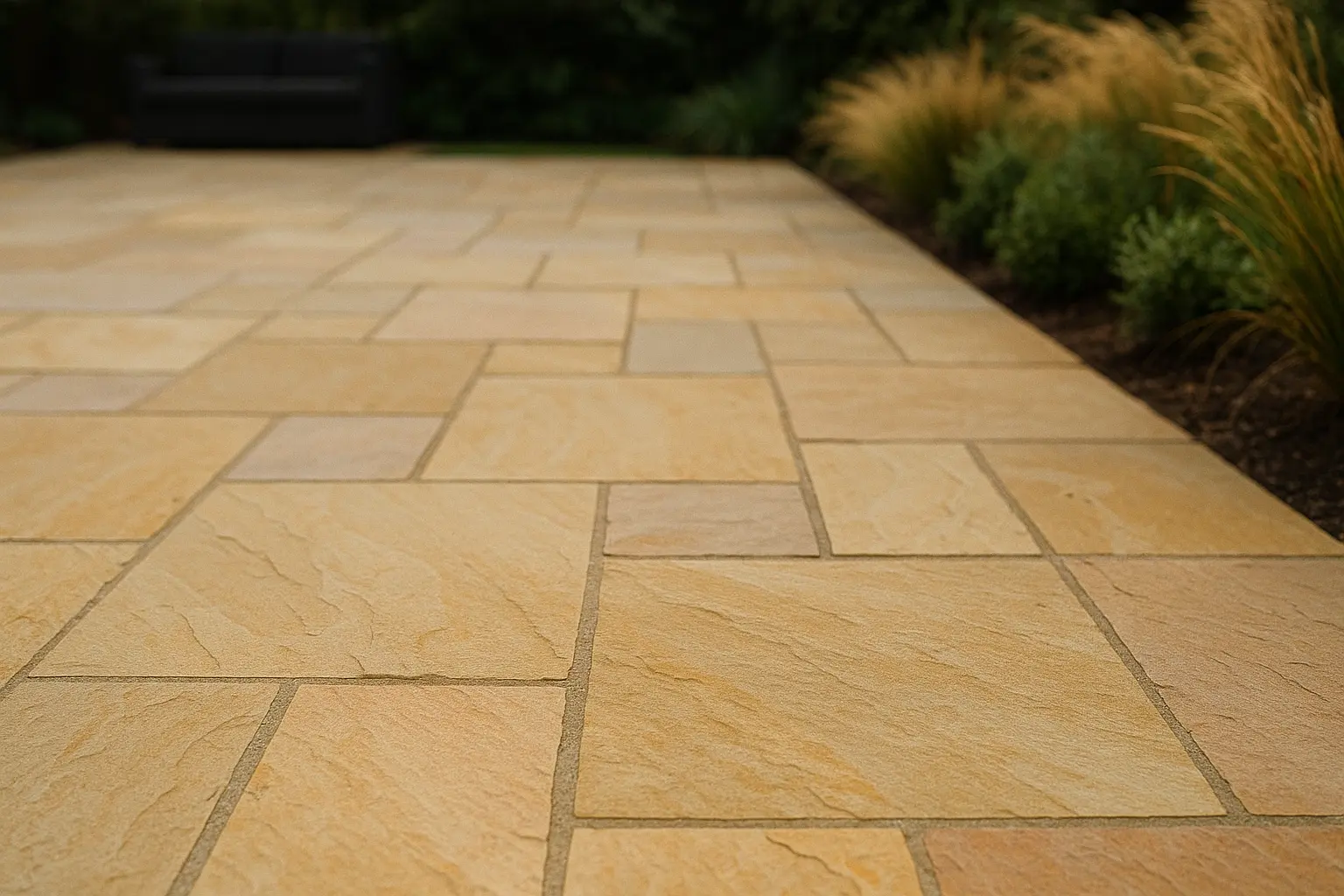
Why some sandstone patios mellow beautifully and others fail, plus insight into quarry quality, test data and ethical sourcing schemes.
Not always. Porcelain is extremely low maintenance and ideal for exposed, coastal or shaded gardens where algae and staining are a concern. High-quality sandstone still performs very well when it is properly installed, drained and, where appropriate, sealed – particularly for more traditional properties around Chichester and the South Downs.
Outdoor porcelain tiles are manufactured with very low porosity and generally do not need sealing. Sandstone is more absorbent and will often benefit from a good breathable sealer, particularly in coastal parts of Bosham and Fishbourne where salt and moisture levels are higher.
Yes – many projects successfully combine porcelain for main terraces and sandstone or similar natural stone for paths, steps or informal areas. The key is to plan levels, edges and jointing carefully so the different materials feel intentional and cohesive rather than random.
Product prices vary, but porcelain typically has a slightly higher installation cost due to full-bed fixing, priming and more precise cutting. Sandstone can be a little cheaper initially, but may require more cleaning and occasional resealing over its lifetime, especially in damp or tree-covered gardens.
Explore all of our in-depth landscaping guides for Chichester, Bosham, Fishbourne, Lavant, Tangmere, Oving, Donnington, Hunston, Apuldram, Goodwood, Westhampnett and South Downs villages:
If you’re considering a new driveway, patio or full garden transformation, we’d be happy to talk through your ideas and advise on the best way forward.
Call: 01428 654812 · 07500 877949
Email: richard@tlchaslemere.co.uk
WhatsApp: Send a WhatsApp message
Telegram: Message on Telegram