
The Landscape Company
Garden Drainage & Ground Engineering
Most garden drainage problems don’t come from “too much rain”. They come from water being forced to behave badly after we harden the ground.
This page explains how water actually moves through gardens, soil and structures — and why good drainage design is about pressure relief, load paths and long-term stability, not just pipes and channels. It underpins how we design patios, driveways, retaining walls and level changes across Haslemere, Hindhead, Grayswood and the wider Surrey/Sussex borders.
When gardens flood, the water usually arrives from several sources at once:
Modern gardens tend to collect and concentrate water instead of letting it disperse naturally. Large paved areas, raised terraces and retaining walls all change the way water wants to travel. Drainage design starts by identifying where water enters the system, not just where it exits.
Soil type determines whether water disappears quietly or hangs around causing trouble:
A common failure point is when water sits on top of compacted subsoil or an old, poorly built sub-base, creating a perched water layer. No amount of surface drainage will help unless that trapped water has somewhere to go. Understanding soil behaviour is as important as choosing the drain itself.
For a closer look at how different soils behave under load and in wet weather, see our soil types in Haslemere guide.
Water acts very differently depending on whether it’s moving across the surface or through the ground:
Hard landscaping can unintentionally act like a lid. A solid patio or driveway may shed rain efficiently, but it can also trap moisture beneath or push it sideways into lawns, beds or walls. Good drainage design accepts that water needs both surface routes and pressure-relief routes below ground.
In the UK, front-garden hard landscaping is subject to stricter rules for a reason. Large impermeable surfaces can overload surface-water systems and increase flood risk downstream. Guidance generally expects that new front-garden paving either:
Rear gardens are less tightly regulated, but the hydraulic behaviour is the same. Moving significant volumes of water off your land — especially toward the road or neighbouring plots — is rarely good practice, even when the law doesn’t explicitly forbid it.
There’s no official “Neighbourly Relations Act”, but English common law has long taken a dim view of one landowner making water someone else’s problem.
If landscaping works deliberately or carelessly collect surface water, concentrate it and discharge it onto neighbouring land, that can stray into nuisance or negligence — particularly if it leads to damp, flooding or long-term ground instability next door.
For that reason, good drainage design aims to:
The goal isn’t box-ticking compliance. It’s simple foresight and keeping relationships — and structures — on good terms.
Most wall failures we see aren’t caused by weight alone. They’re caused by water pressure.
Saturated soil can exert far greater lateral force than dry ground. Without pressure relief, walls bow, crack or move over time. Proper retaining-wall drainage typically includes:
When patios, steps or driveways sit tight to a wall, drainage becomes structural, not optional. We cover wall design and safety in more depth in our retaining wall rules & safety guide.
Sub-bases do more than support load — they also store and transport water. Depending on material and compaction:
This is why sub-base selection, depth and grading are part of drainage design, not separate from it. We explore the material options in more detail in our Sub-bases Explained guide.
Every drainage strategy needs a destination. Good solutions usually follow a simple hierarchy:
Dumping water swiftly off-site may solve today’s puddle — but often creates tomorrow’s subsidence or neighbour dispute.
We design landscapes from the bottom up:
That approach produces gardens that stay drier, structures that move less, and surfaces that age more gracefully over time. It’s the same structural thinking behind our guides to paving build-ups and driveway construction standards.
Discuss Drainage & Groundworks
Drainage only works properly when soil behaviour, sub-bases and retaining structures are all pulling in the same direction. These guides explore those pieces in more detail and link directly into the same structural logic.

How linear drainage channels actually work, where they should and shouldn’t be used, and why incorrect placement often creates more problems than it solves around patios, driveways, thresholds and retaining walls.
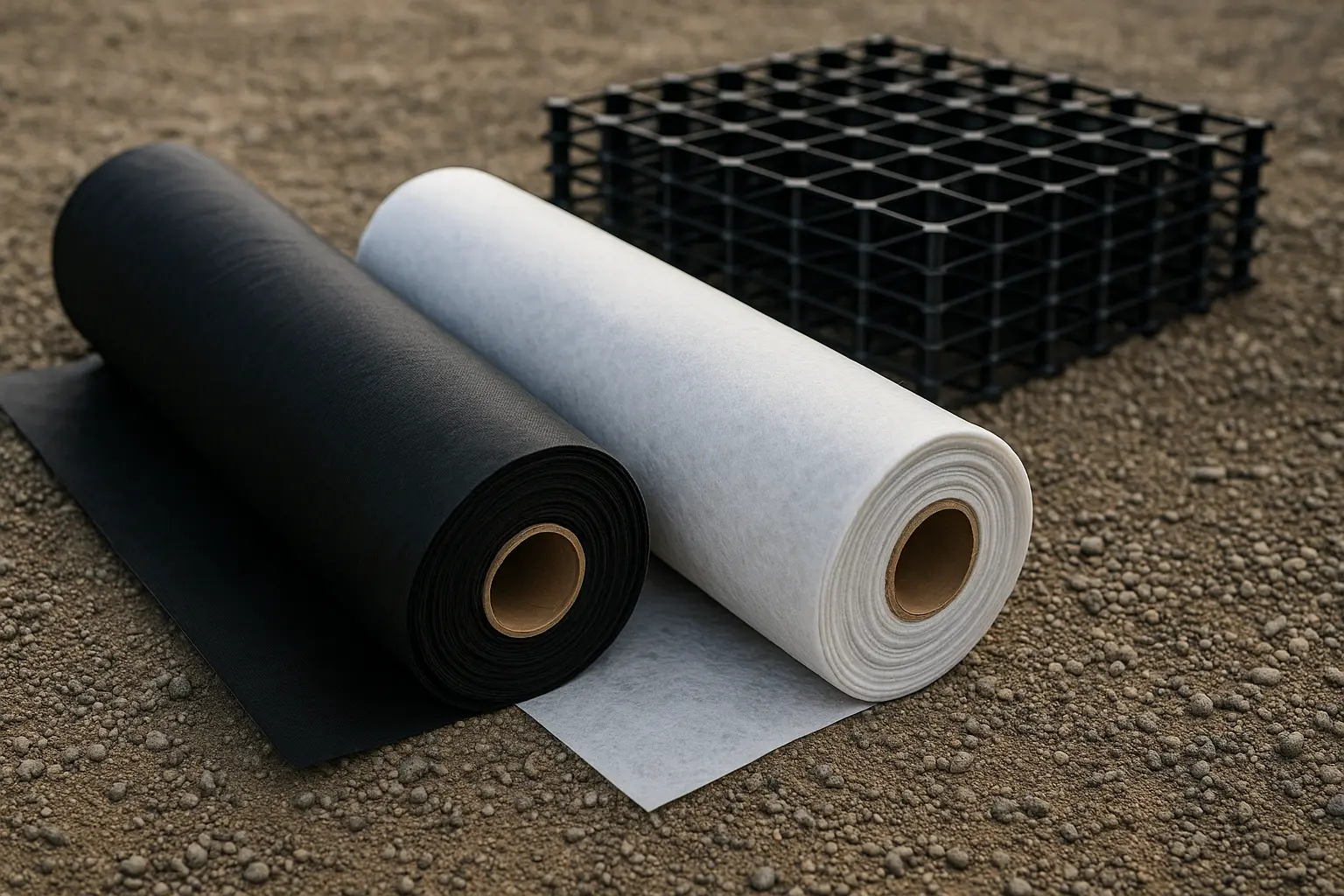
Where separation fabrics, reinforcement grids and weed-suppressing geotextiles sit in the build-up — and how they interact with drainage and sub-bases.
Occasional puddles after heavy rain are normal. Drainage becomes an issue when water consistently lingers in the same places, lawns squelch long after dry spells, hard surfaces stay green and slimy, or structures such as patios, steps and walls start to move. These are signs of saturated ground and poor pressure relief behind the scenes.
Not always. In some gardens, carefully designed falls, permeable borders and open-graded sub-bases are enough to let water soak away within the plot. Soakaways are most useful where there is a lot of roof or hard-surface water and suitable free-draining ground to discharge into. The key is to design a complete water route, not just add a crate and hope for the best.
Yes. Constantly saturated ground can soften sub-bases, increase frost damage and add water pressure behind walls. Over time this can lead to movement, cracking or sinking of paving and retaining structures. Designing clear water routes and pressure relief is part of building long-lived hard landscaping, not a separate extra.
It can be. Falling a large impermeable surface directly toward a neighbour’s plot or onto a shared fence line concentrates water where it was never meant to go. Aside from the practical and relationship issues, deliberately pushing run-off next door can drift into nuisance or negligence if it causes damage. We usually design patios and drives so water is collected and managed within your own garden.
If you are dealing with persistent wet spots, sinking patios or level changes that never quite behave in wet weather, we are happy to share practical advice based on real drainage and groundworks projects in and around Haslemere, Hindhead, Grayswood, Liphook, Petersfield, Godalming, Guildford and Chichester.
Call: 01428 654812 · 07500 877949
Email: richard@tlchaslemere.co.uk
WhatsApp: Send a WhatsApp message
Telegram: Message on Telegram