The Landscape Company · Guildford
Patios built to belong in the garden
Natural limestone, sandstone and porcelain patios designed around the house, the garden and the way you want to use the space.
Request a patio assessment
The Landscape Company · Guildford
Natural limestone, sandstone and porcelain patios designed around the house, the garden and the way you want to use the space.
Request a patio assessment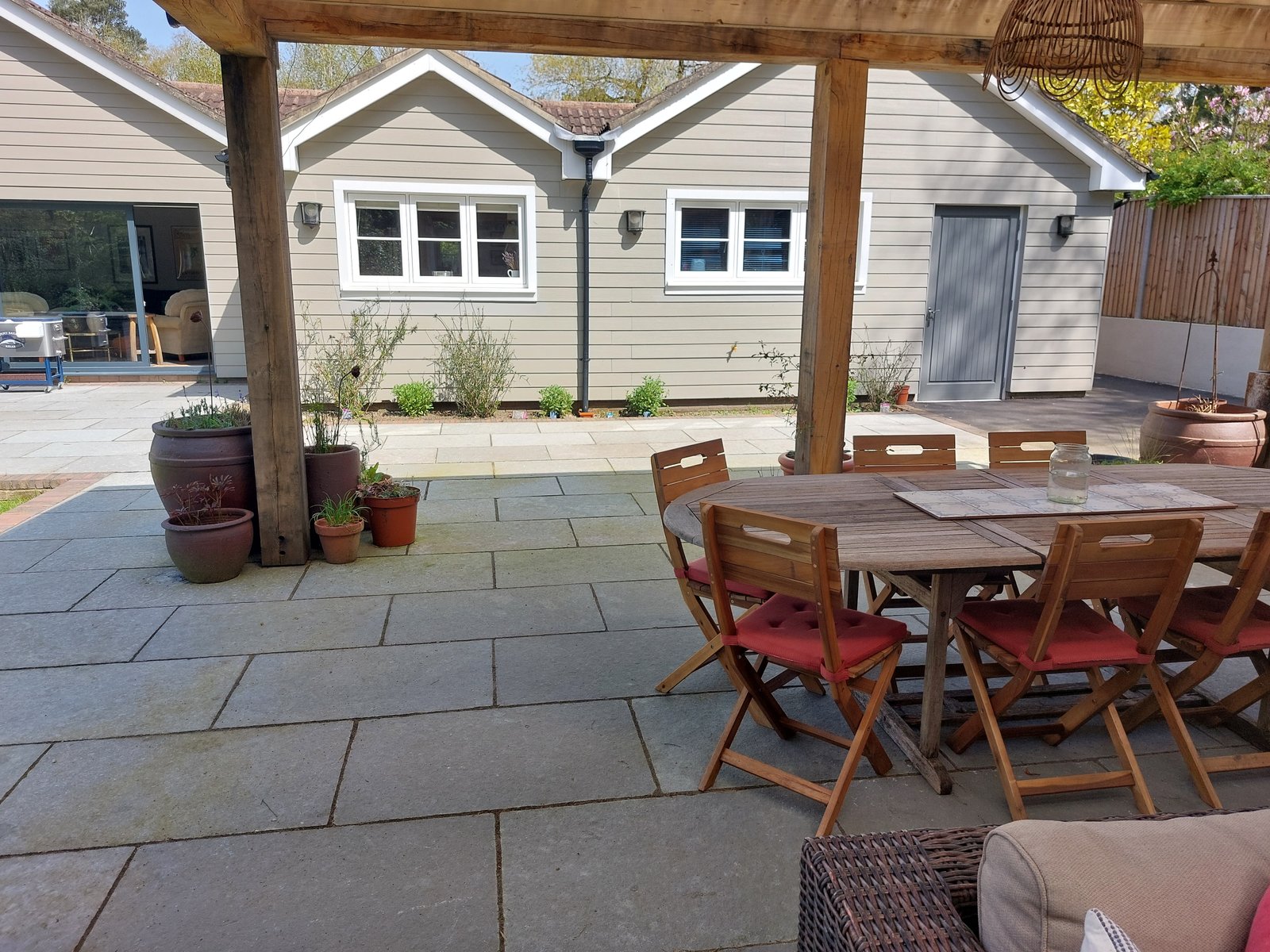
Natural Stone
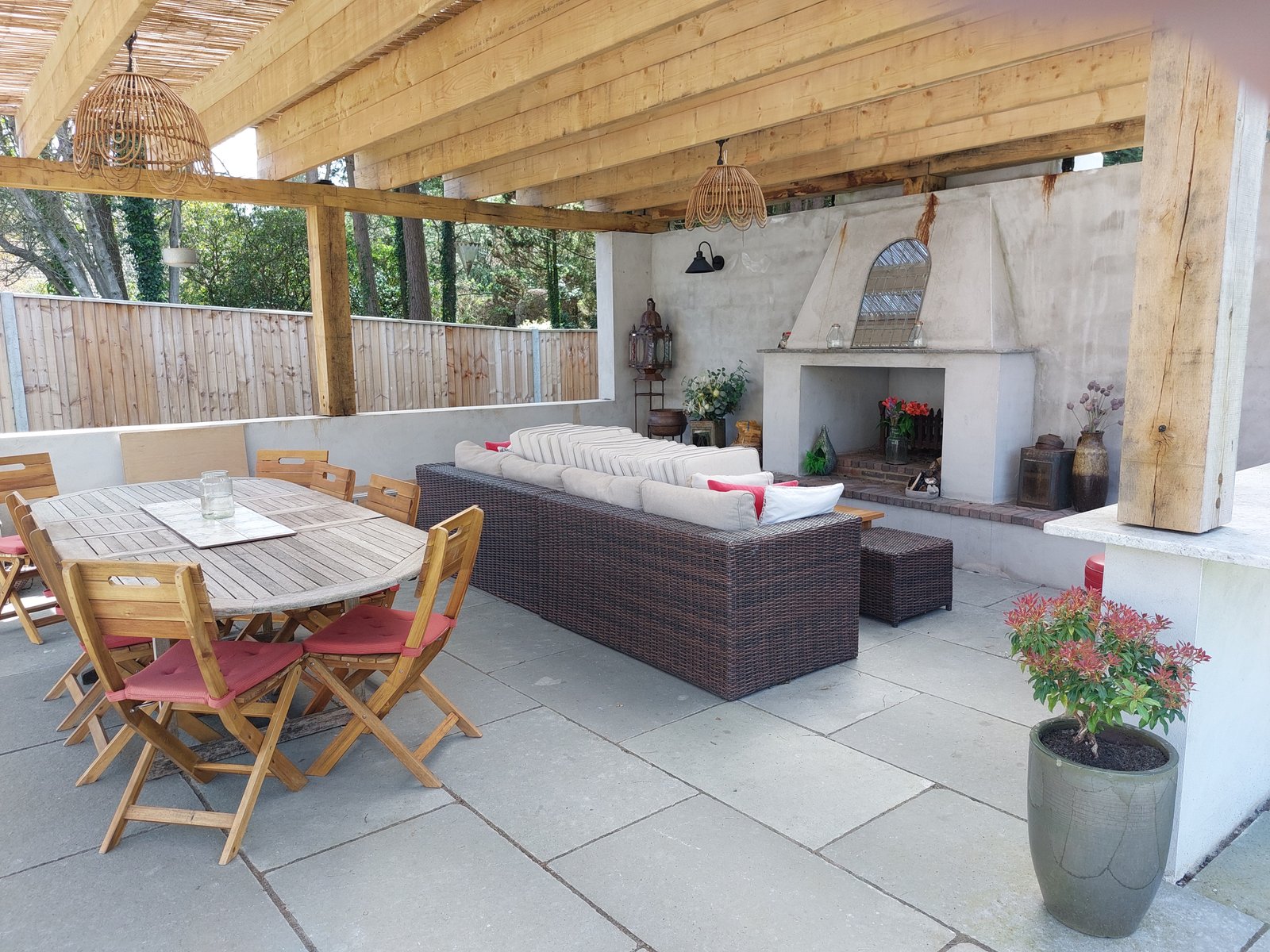
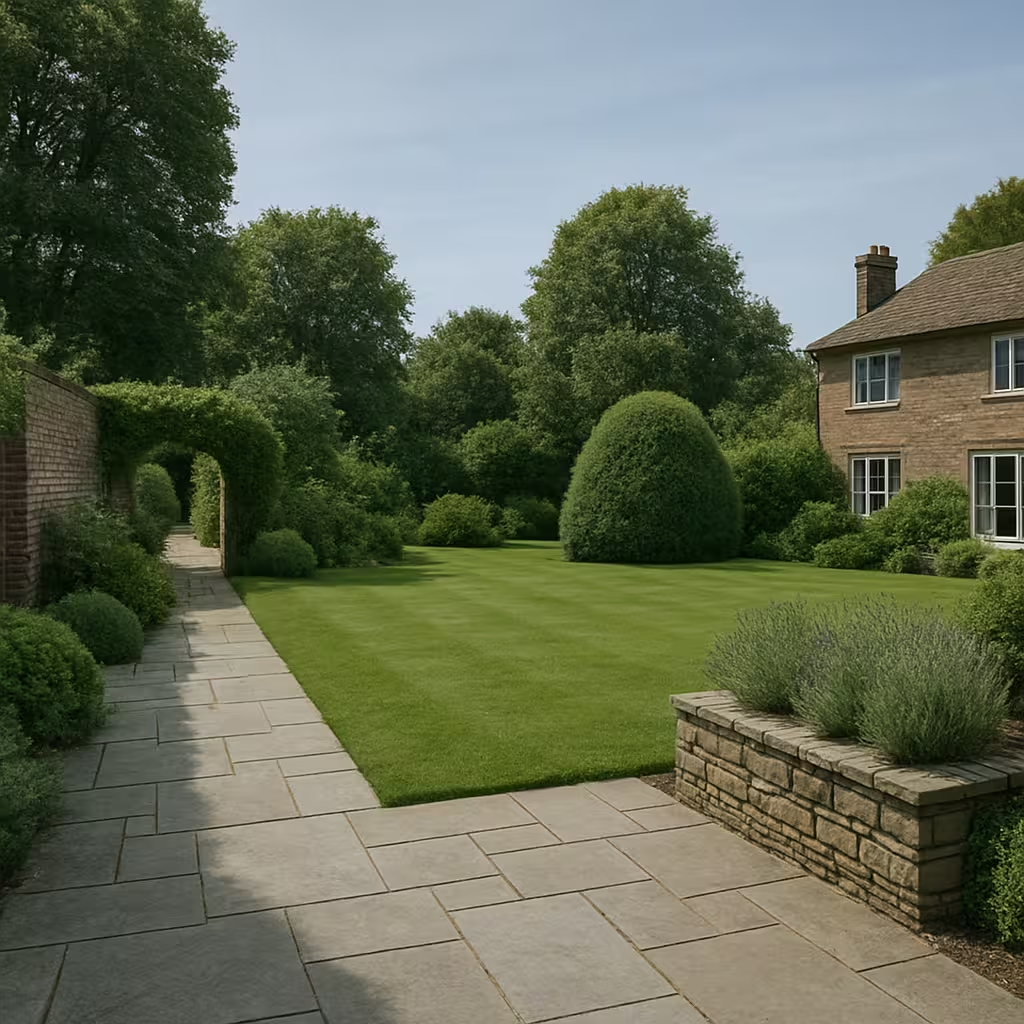
A second view of the same garden room terrace, showing how natural limestone can sit comfortably alongside established planting and a traditional home.
Paving · Steps · Levels
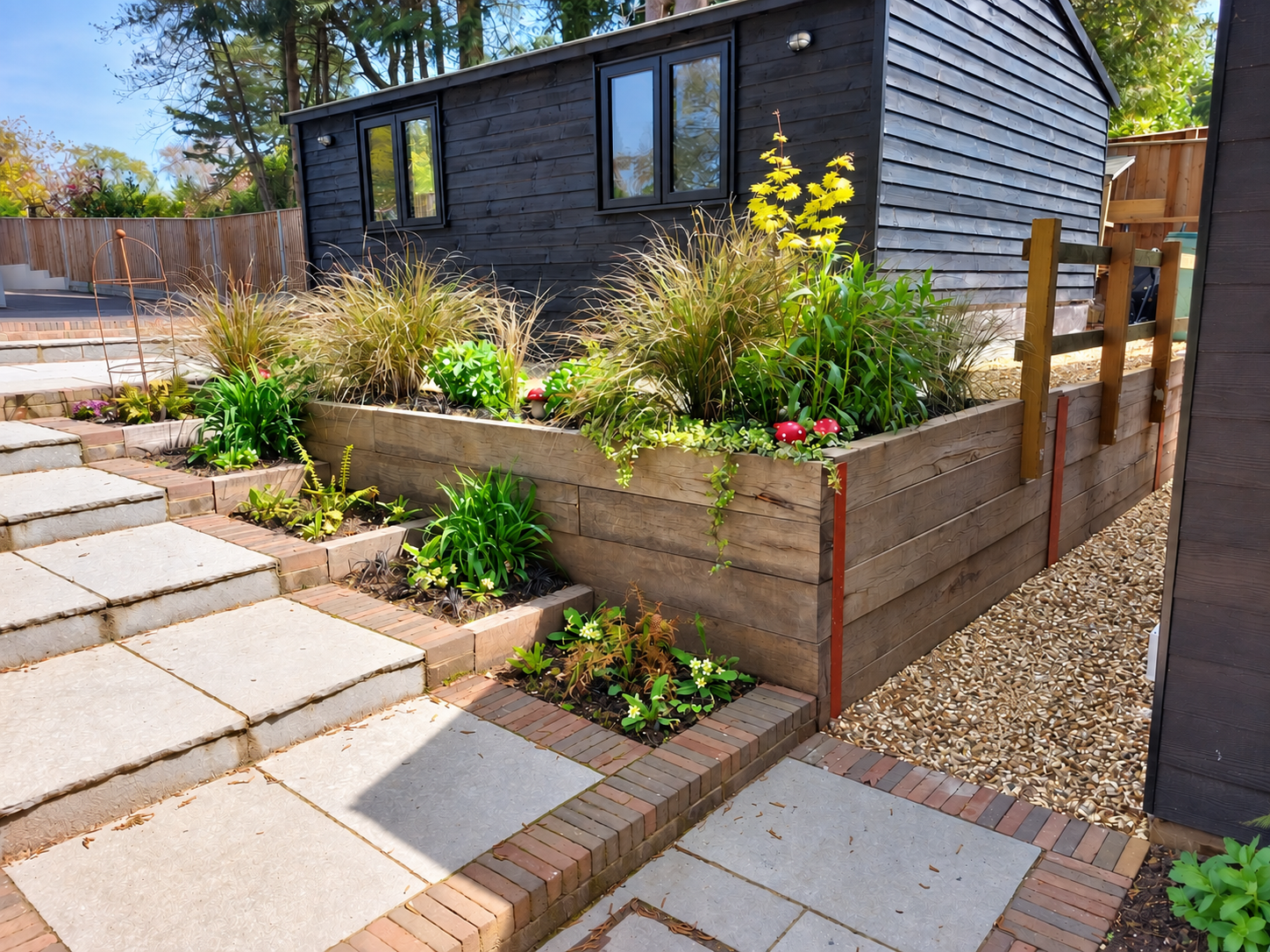
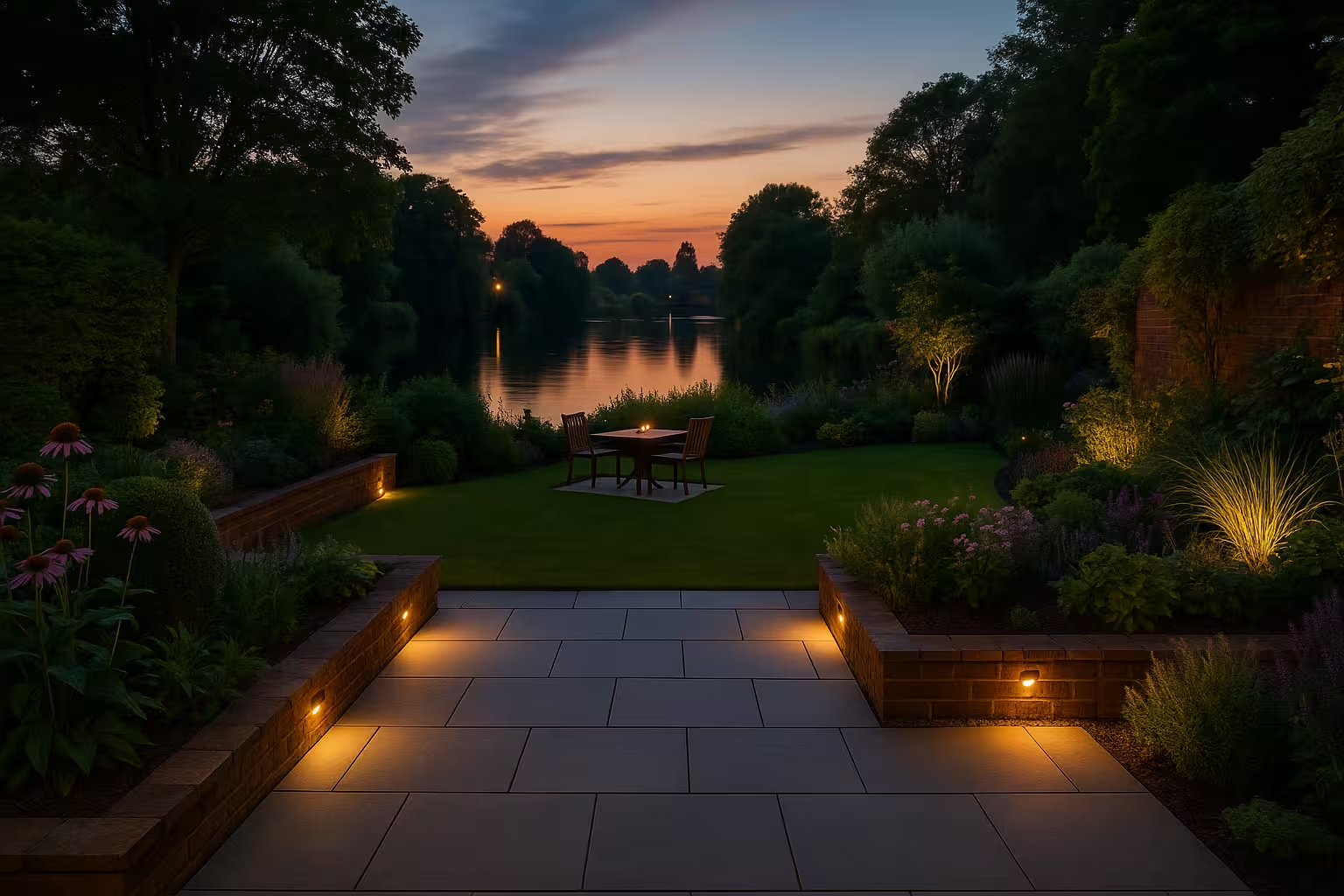
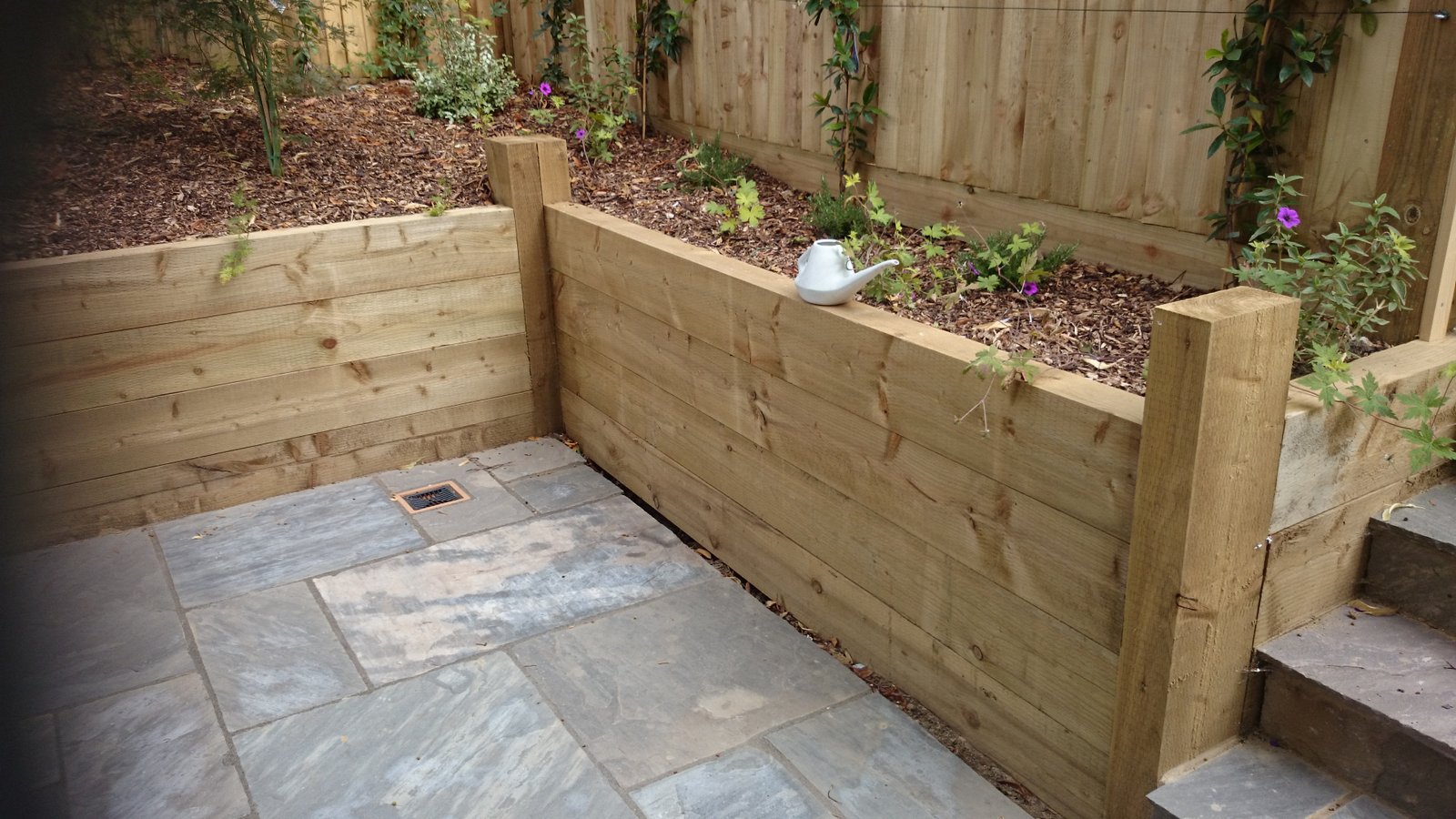
Limestone paving, brick-framed steps, planted borders, gravel paths and a small RSJ retaining wall working together to manage changes in level.
Indian Sandstone
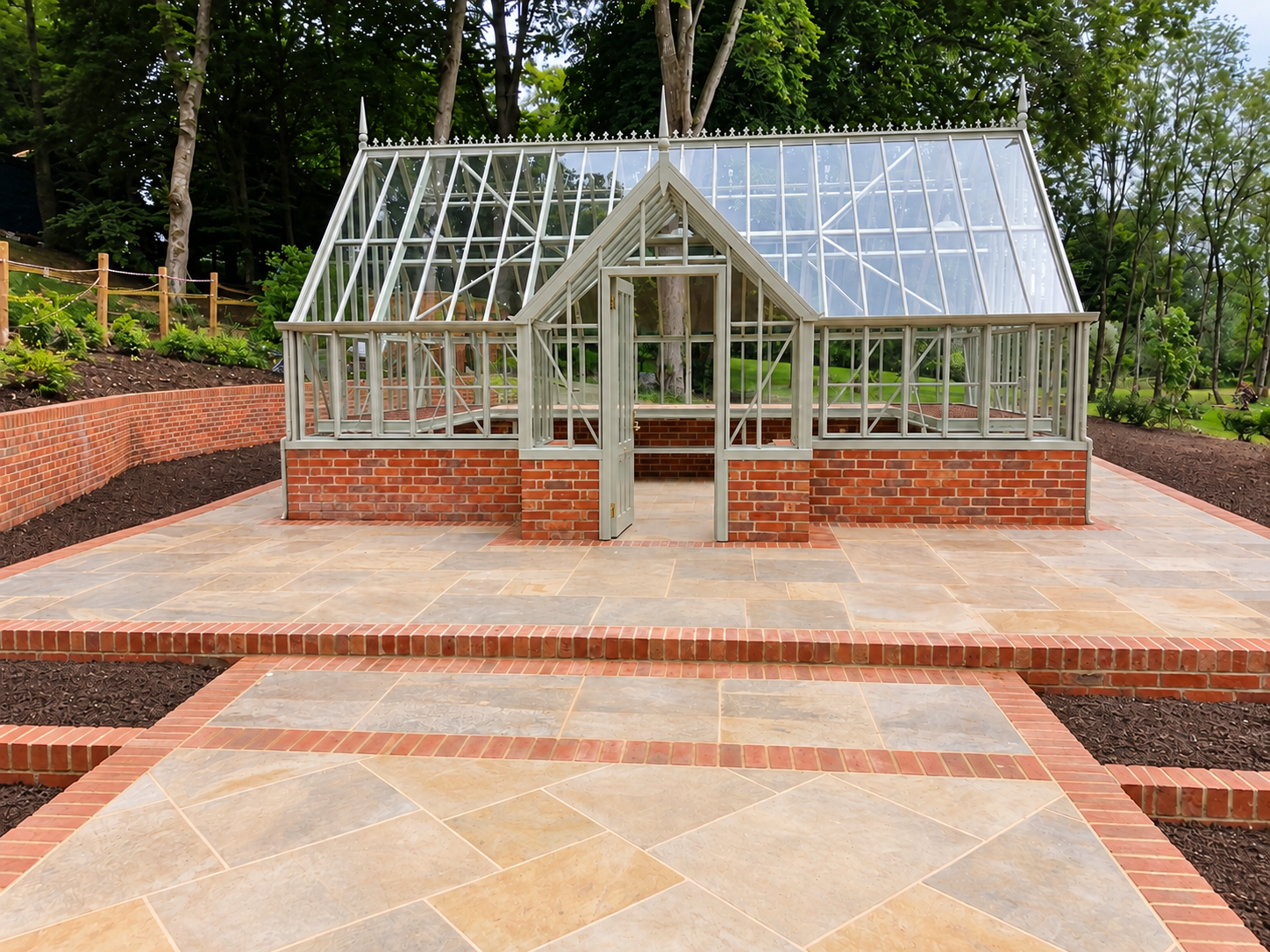
Indian sandstone around an Alitex glass house, with brick-on-edge framing, red-brick retaining walls and a mixture of formal and 45-degree paving.
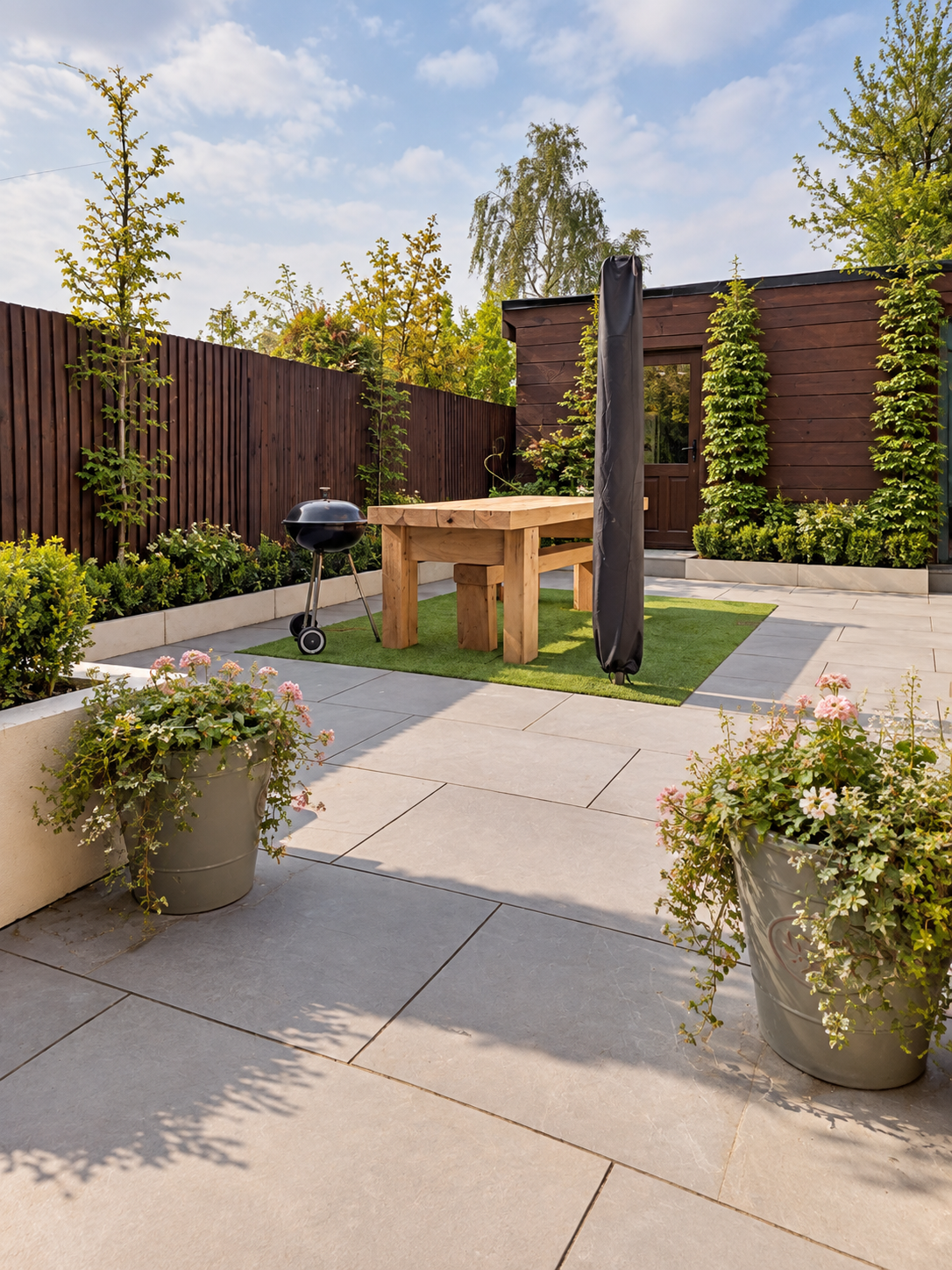
Porcelain Paving
600 × 900 grey porcelain used throughout a difficult-access mid-terrace garden, with rendered retaining walls, raised planters and a practical seating area.
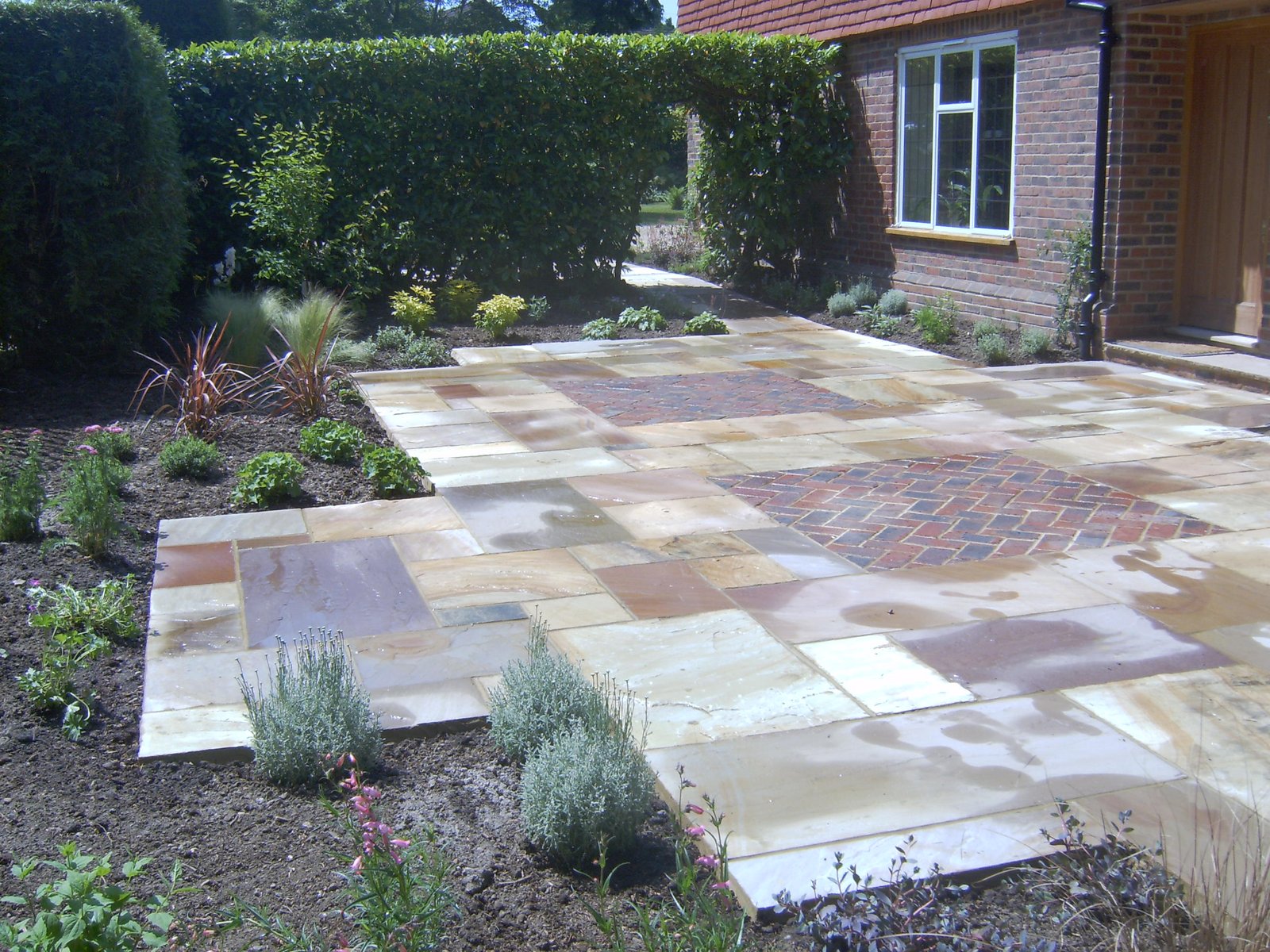
Indian Sandstone · Brick Detail
Indian sandstone with 45-degree herringbone brick infills, planted borders and a more individual paving shape without relying on curved cuts.
Looking for a new patio in Guildford or the surrounding area? Guildford has an unusually wide mix of homes and gardens — from townhouses and compact central properties to larger family houses around Burpham, Merrow, Stoughton, Shalford, Bramley, Onslow Village and the Surrey Hills. A good patio needs to work with the character of the property, the shape of the garden and the way the space will actually be used.
Whether you are replacing an old terrace, creating a new entertaining space or planning a wider garden transformation, we design and build patios with the same attention to foundations, levels, drainage and finish that we bring to every garden we construct.
The photographs above show the range of paving, materials and garden settings we work with. The projects are examples of our construction work rather than claims that every photograph was taken in Guildford.
The Landscape Company designs and builds patios, driveways and complete garden spaces for homes in Guildford and the surrounding Surrey villages. We combine thoughtful planning with proper groundworks and careful construction, creating outdoor spaces that look right and perform properly for years to come.
Whether you're replacing an existing patio, creating a new driveway or planning a more substantial garden transformation, we manage the construction from preparation through to completion.
Porcelain, Yorkstone and natural stone patios, designed around the property and built with proper foundations, drainage and carefully finished details.
Structurally sound garden walls and retaining walls, designed around the site with proper foundations, accurate levels and construction built to last.
Gravel drives, paved approaches, granite set borders and entrance detailing that complements both period and contemporary Guildford homes.
Retaining walls, steps, paths, seating areas and structural garden elements that bring shape, flow and longevity to your outdoor space.
We help refine your ideas into a clear plan, then manage the full build — coordinating materials, timings and finishes from start to completion.
We focus on considered, construction-led landscaping for homes in and around Guildford. From first conversation through to the final clean down, everything is handled with care by our own team — from porcelain and natural stone patios to full garden transformations .
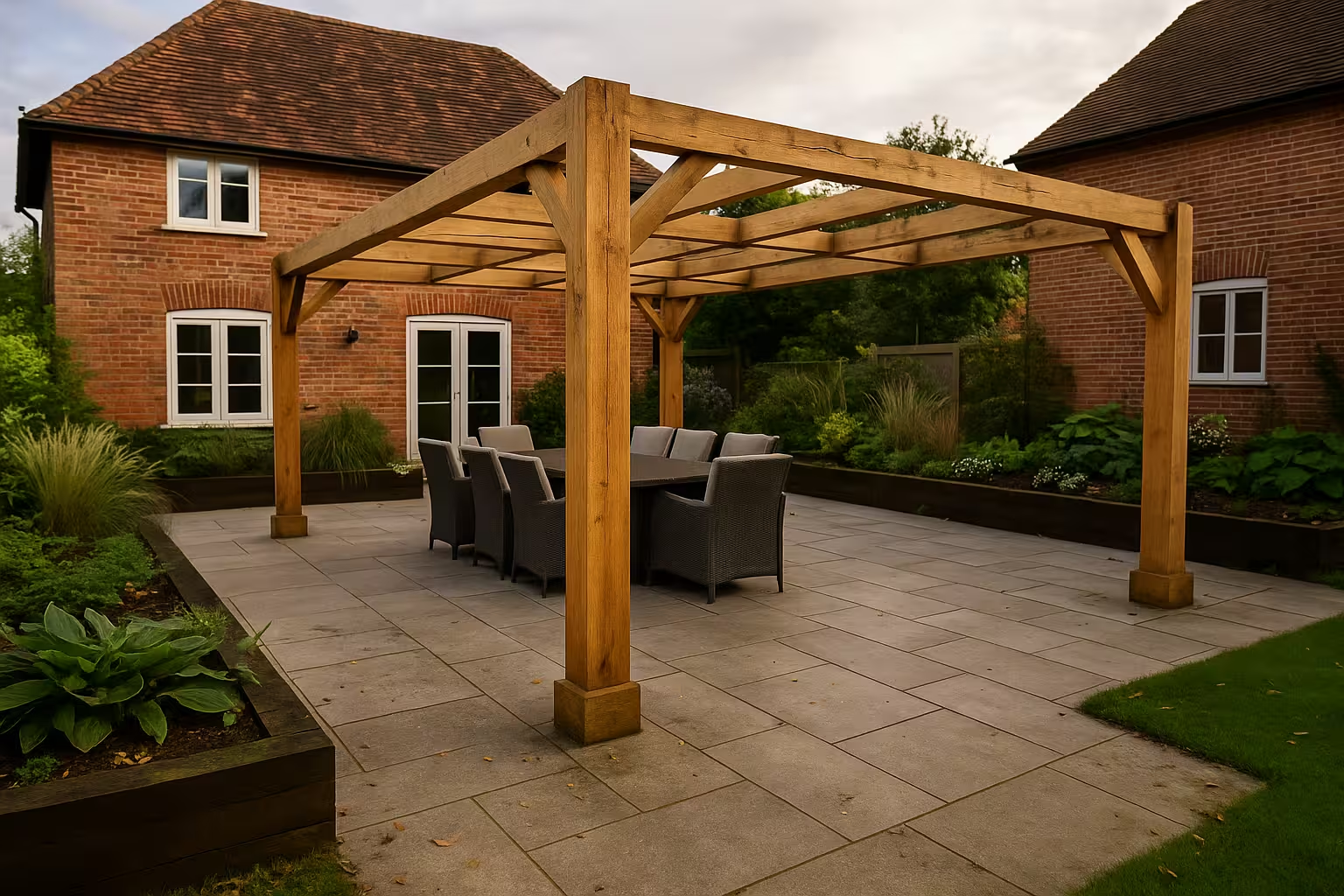
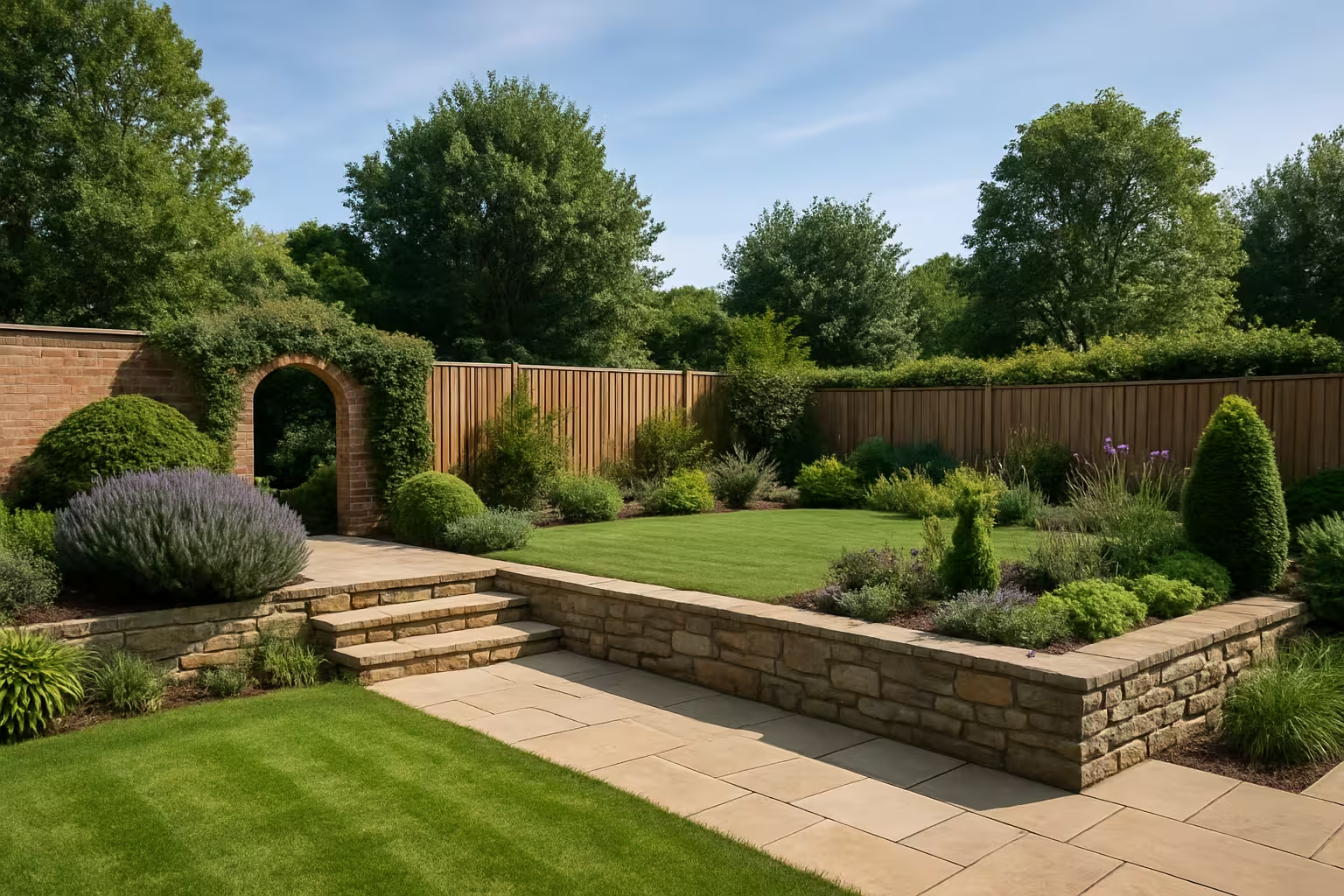
Want to see more of our work? Visit our What We Do page for an ever-growing gallery of completed projects and work in progress, photographed on site as the work takes shape.
Visit What We Do →
Our work is designed around load, ground behaviour and drainage — because outdoor construction has to cope with rainfall, soil movement, seasonal change, roots, slopes and time itself.
Examine our 5-year structural guarantee →You've seen what we build. Now meet the people who build it. From the first conversation and site assessment through ground preparation, construction and finishing, our team is involved in creating the garden you've asked us to build.
.png)
Thinking about a new patio or garden project in Guildford or the surrounding area? Talk to us about what you have in mind.
The finished patio is only the last part of the job. These examples show the sort of construction work behind a finished natural-stone or porcelain surface, from preparing the ground and setting levels to laying and finishing the paving.
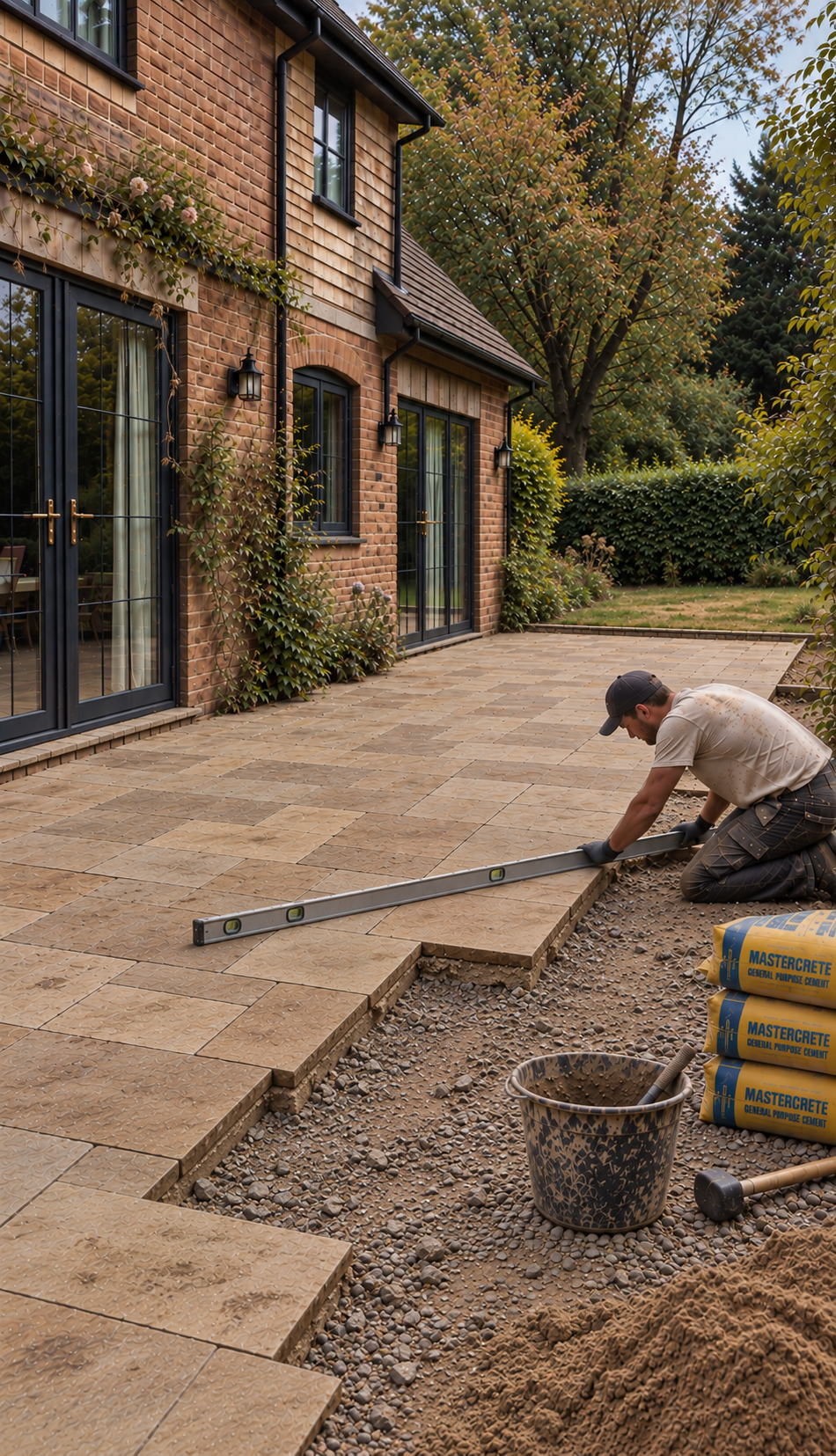
Ground preparation, accurate levels and careful laying before the finished natural stone surface is complete.
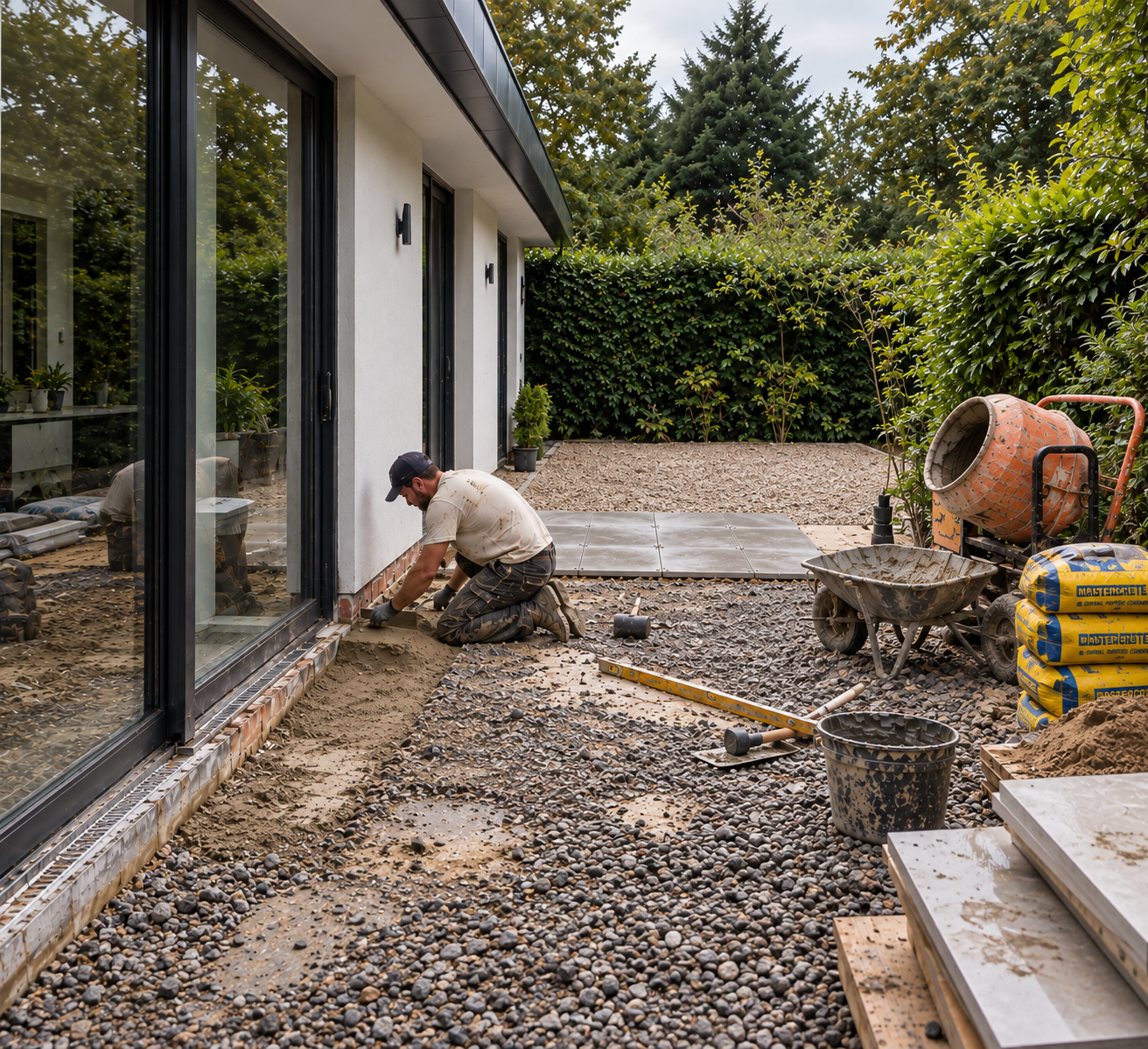
Preparing the base and setting the paving carefully around the house, thresholds and wider garden levels.
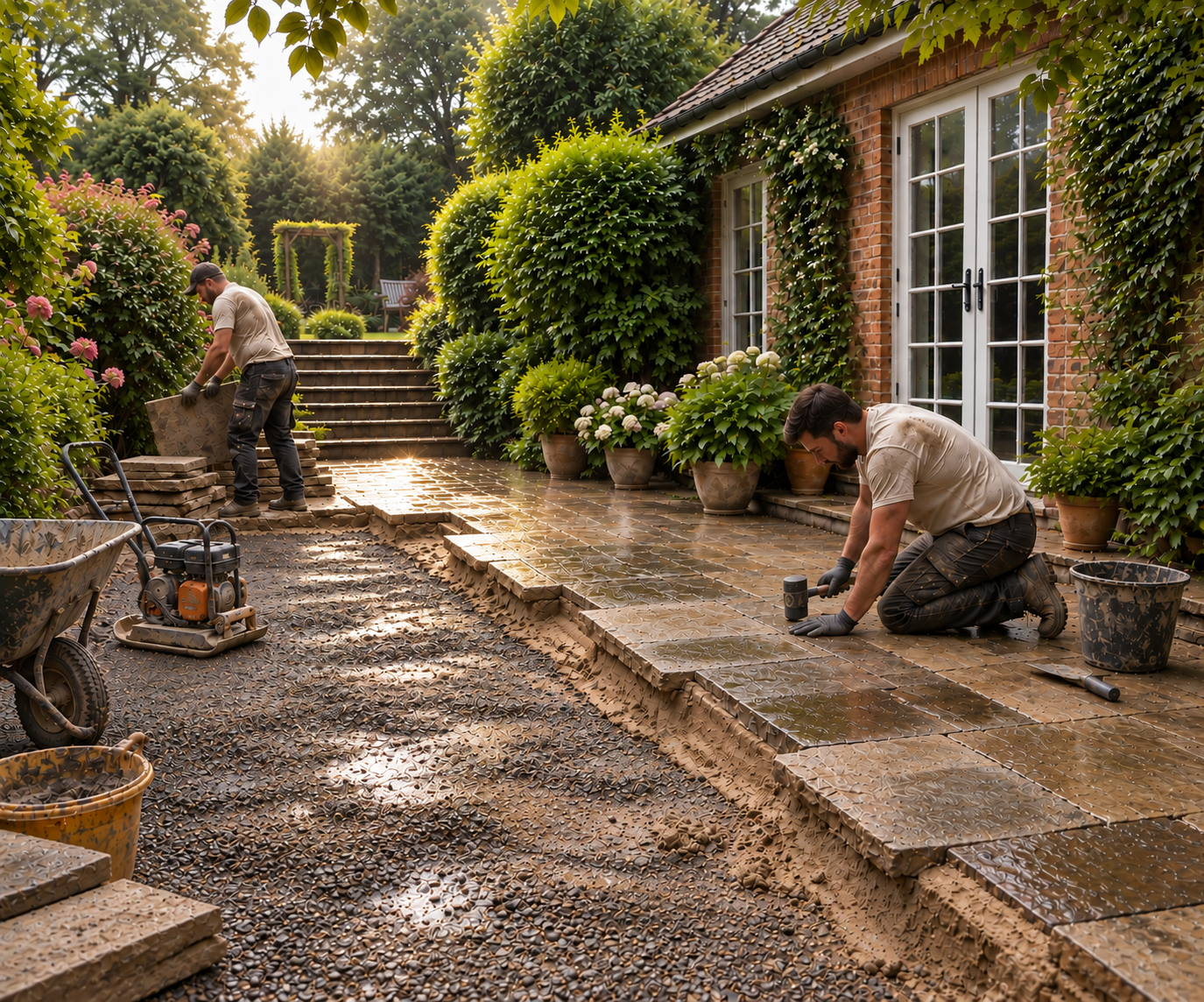
Laying and setting paving within an established garden, with changes of level, access and surrounding planting considered.
Guildford gardens range from relatively level plots to steeper, stepped sites towards the Surrey Hills. Soils and existing ground conditions can vary considerably from one property to another, with sandy loam, heavier clay pockets and older made-up ground all possible.
These conditions mean the sub-base beneath your patio is just as important as the surface material you see. Common problems we are called out to investigate include:
Almost all of these problems can be traced back to insufficient excavation, poor compaction or a lack of thought about where water will go. Our Guildford garden drainage & groundworks guide goes into more detail on dealing with wet or problem ground.
Every project starts with a detailed assessment of your garden. For Guildford properties we typically look at:
From here we agree the final finished height of the patio, the direction of falls and any step or retaining wall / level change details needed to tie the new terrace neatly into the rest of the garden.
For a long-lasting patio, proper excavation is essential. As a general working guide, we typically consider:
Most of our Guildford projects use either high-quality porcelain or natural stone, depending on the property, the intended use of the space and the maintenance preferences of the homeowner. See our Porcelain vs Sandstone guide for Guildford for a deeper comparison.
Correct falls and drainage details are essential for patios in Guildford. Standing water not only looks poor but can accelerate algae growth and contribute to deterioration of the paving and joints.
Where levels are tight, particularly around compact or terraced properties, we may recommend adjustments to the surrounding garden or narrow retaining details to keep water moving away from the building. See our Guildford drainage guide for more detail.
Some Guildford gardens have significant changes of level, particularly as you move towards the Surrey Hills or on sites where older gardens have already been terraced. A patio may therefore need to work alongside steps, retaining structures and different finished levels.
For more technical schemes involving banks or parking areas, see our page on retaining walls and level changes in Guildford .
Request a patio consultation in Guildford
Every project is different, but patio budgets in the Guildford area generally depend on access, levels, retaining walls, drainage requirements and material choice. Our Guildford landscaping costs guide provides indicative ranges for patios, driveways and wider garden schemes.
A patio is a long-term investment in how you use your home. Built properly, it should feel solid, drain well and tie seamlessly into your garden and internal living spaces.
If you're considering a new terrace in Guildford, Burpham, Merrow, Stoughton, Shalford, Bramley, Onslow Village or the surrounding Surrey Hills, we'd be pleased to visit, assess your site and outline the most sensible way forward.
Request a patio consultation in Guildford
If you’d like to understand what really makes a patio last — from sub-base and bonding to porcelain and sandstone quality — these deeper guides go beyond brochure photos and look at how the structure and materials behave over time.
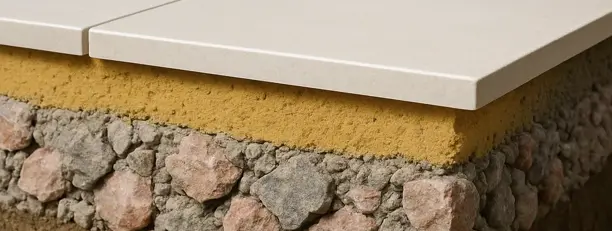
A structural look at patios: what sits under the slabs, how cement cures, why full bonding matters, and why most failures start long before the surface is finished.
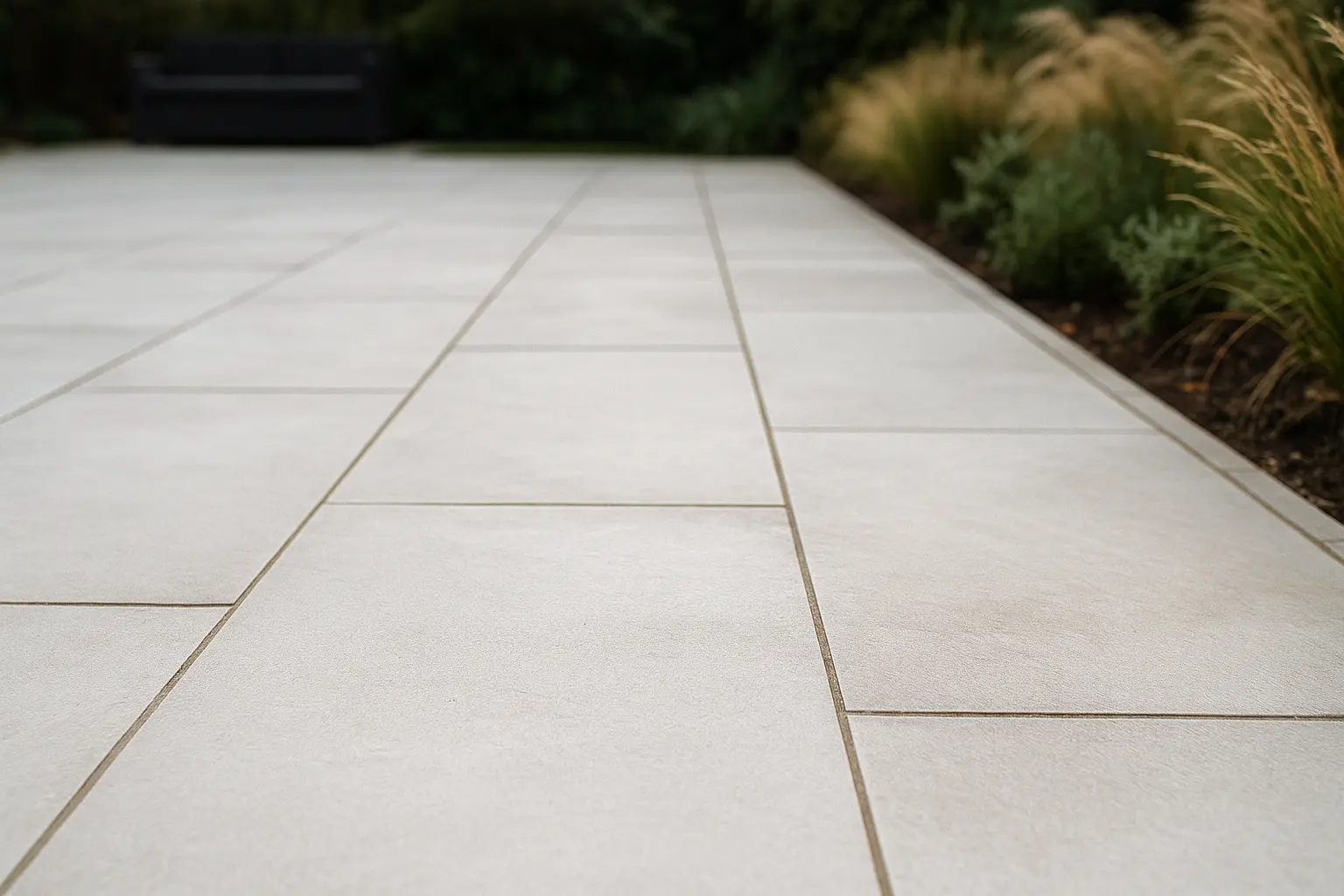
How porcelain is engineered, why some tiles crack outdoors, and how we assess quality before agreeing to install a product.
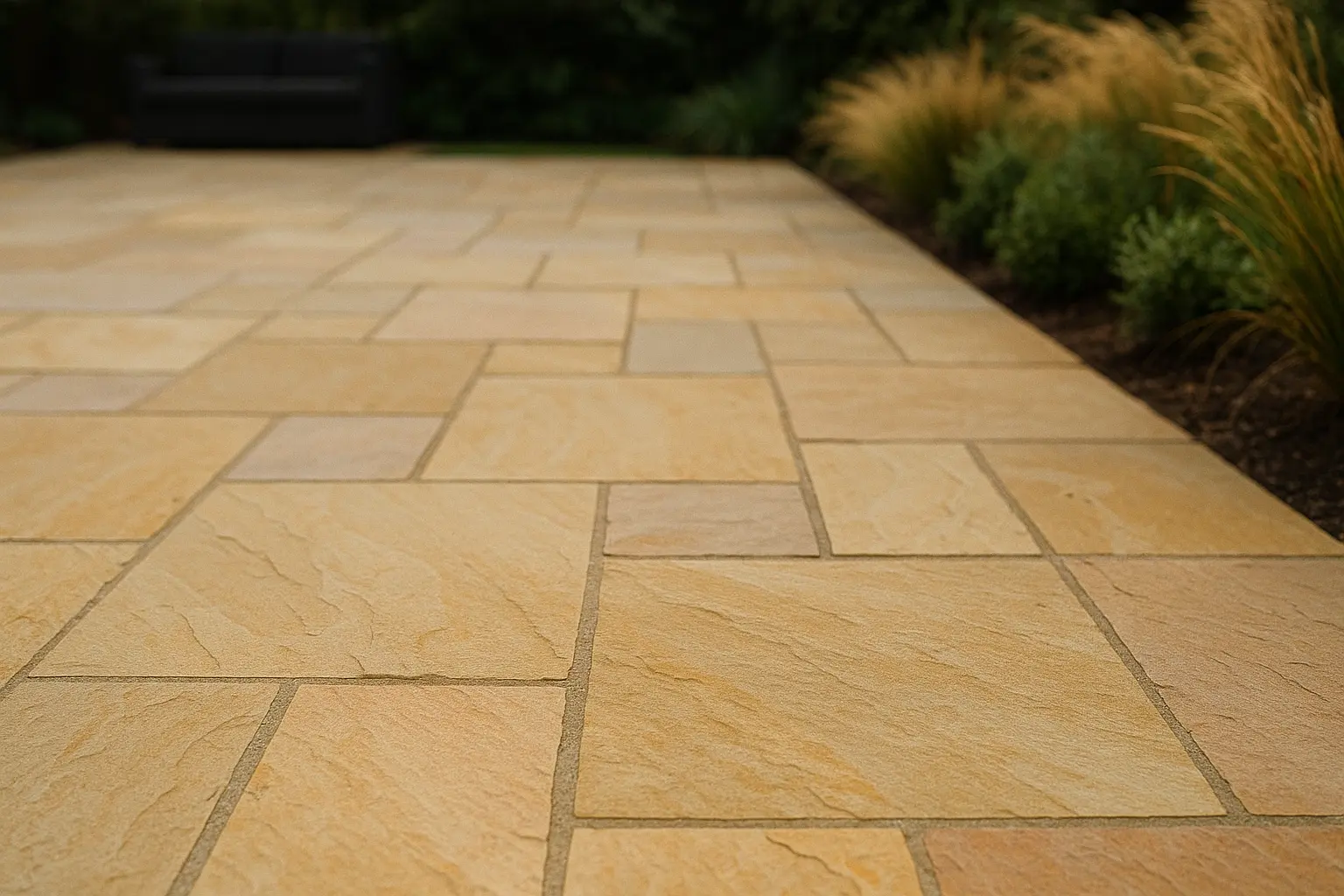
Why some sandstone patios mellow beautifully and others fail, plus insight into quarry quality, test data and ethical sourcing schemes.
Landscaping is not simply about choosing materials that look good. On Guildford and surrounding Surrey properties, levels, drainage, ground conditions and access can have as much influence on the finished result as the design itself.
We consider the ground beneath the garden as carefully as the finished surface, with proper preparation and construction at the heart of every project.
Levels, drainage, access, existing structures and local ground conditions are considered before construction begins.
We manage the practical construction process as one coordinated project, keeping the work clear and straightforward from preparation to completion.
We explain the options, materials, construction requirements and likely costs so you can make informed decisions before work begins.
We provide high-quality landscaping and garden construction services throughout Guildford and its surrounding villages, including Burpham, Merrow, Stoughton, Shalford, Bramley and Onslow Village. Whether you're looking to redesign a tired garden, install a porcelain patio , create a new driveway or re-shape your outdoor space, our team brings careful planning, skilled workmanship and long-lasting results.
Guildford homes often benefit from thoughtful drainage, level changes and considered material choices — and we help you make the right decisions from the outset. Every project is built by our own team, ensuring consistent workmanship, clean site management and a smooth process from first meeting to final handover.
If you're planning a patio , driveway , retaining wall, pathway or full garden transformation in Guildford or the wider Surrey Hills, we’d be pleased to offer advice and outline the most effective way to bring your ideas to life.
For most Guildford gardens we work to a total patio build-up of around 150–200 mm from the prepared subgrade to the finished paving surface. On soft or made-up ground we may dig deeper and increase the thickness of the MOT Type 1 sub-base to ensure long-term stability.
Rear garden patios are usually covered by permitted development, but there are specific rules for surfacing front gardens, listed buildings and conservation areas around Guildford. We discuss any likely constraints on our first visit and can refer you to the local planning guidance where needed. Our planning permission guide for Guildford landscaping sets out the key principles.
Smaller replacement patios in Guildford can often be completed in around a week, whereas larger multi-level terraces with steps, retaining walls and detailed drainage may take several weeks. Before starting, we provide a clear programme so you know what to expect.
Porcelain offers a modern, low-maintenance finish with very low porosity, while sandstone and other natural stones provide more character and variation. The right choice depends on how you use the space, the style of your home and how much ongoing maintenance you’re comfortable with. Our porcelain vs sandstone guide for Guildford compares the options in more depth.
Explore all of our in-depth landscaping guides for Guildford, Burpham, Merrow, Stoughton, Shalford, Bramley, Onslow Village and the surrounding Surrey Hills:
If you’re considering a new patio, driveway or full garden transformation in or around Guildford, we’d be happy to talk through your ideas and advise on the best way forward.
Call: 01428 654812 · 07500 877949
Email: richard@tlchaslemere.co.uk
WhatsApp: Send a WhatsApp message
Telegram: Message on Telegram
Tell us a little about your project and we’ll get back to you within 24 hours.